For most commuters, Akebono ProACT ceramic pads are a strong first pick of best brake pads: they need no break-in, run quiet, and produce little dust on popular late-model domestic and Asian vehicles. If you tow, drive hard on mountain roads, or run track days, a different product line will serve you better. Often the right choice comes from a different line within the same brand.
Brand reputation only gets you halfway. Wagner, Brembo, and Raybestos each sell several pad lines with different shims, hardware, and friction formulas. Two boxes with the same logo can behave very differently on your car.
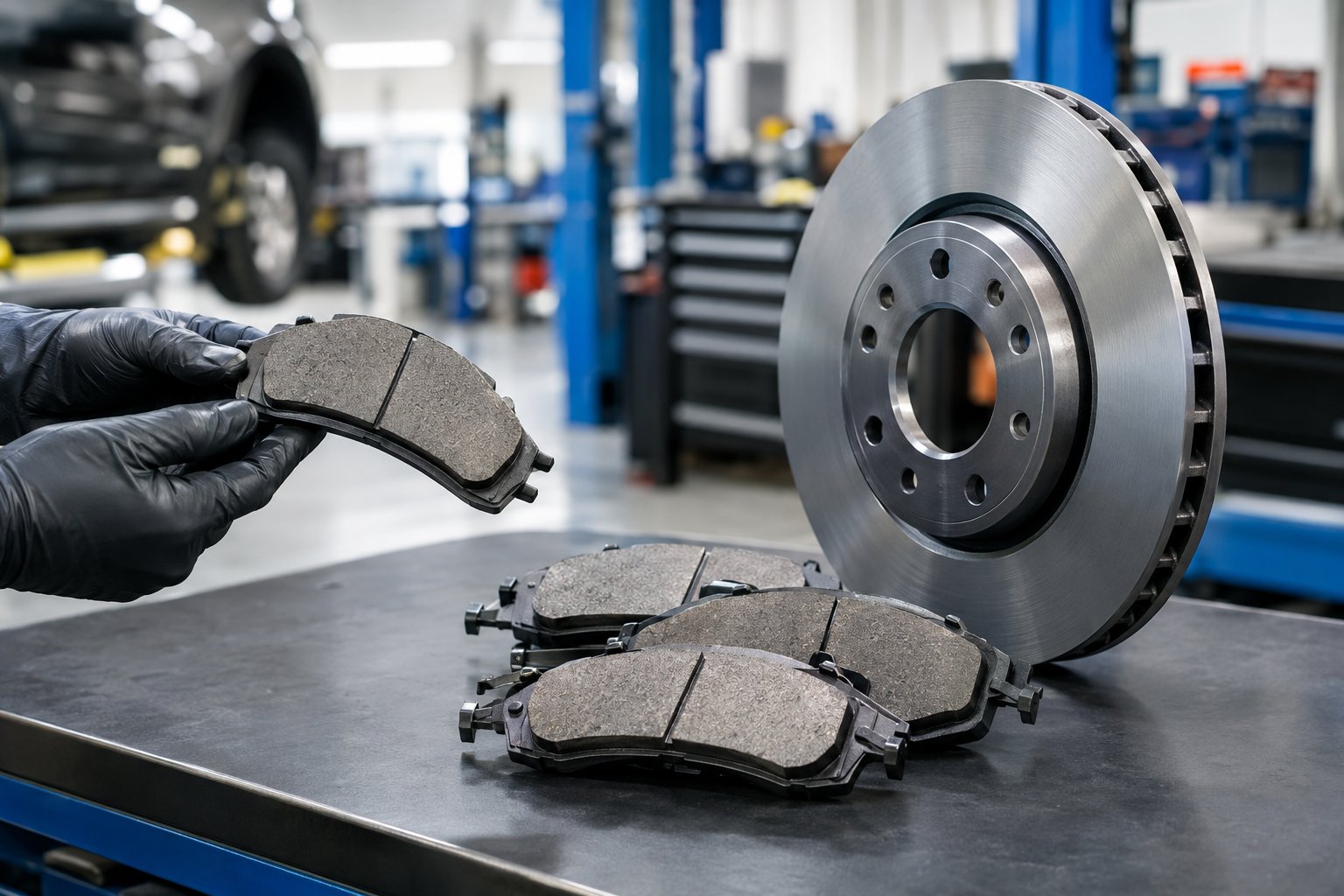
By the end, you’ll be able to match a pad line to how you drive, check that it fits your exact brake package, and spot the problems a new set of pads won’t fix.
Which Brake Pads Should You Buy for Your Driving Needs?
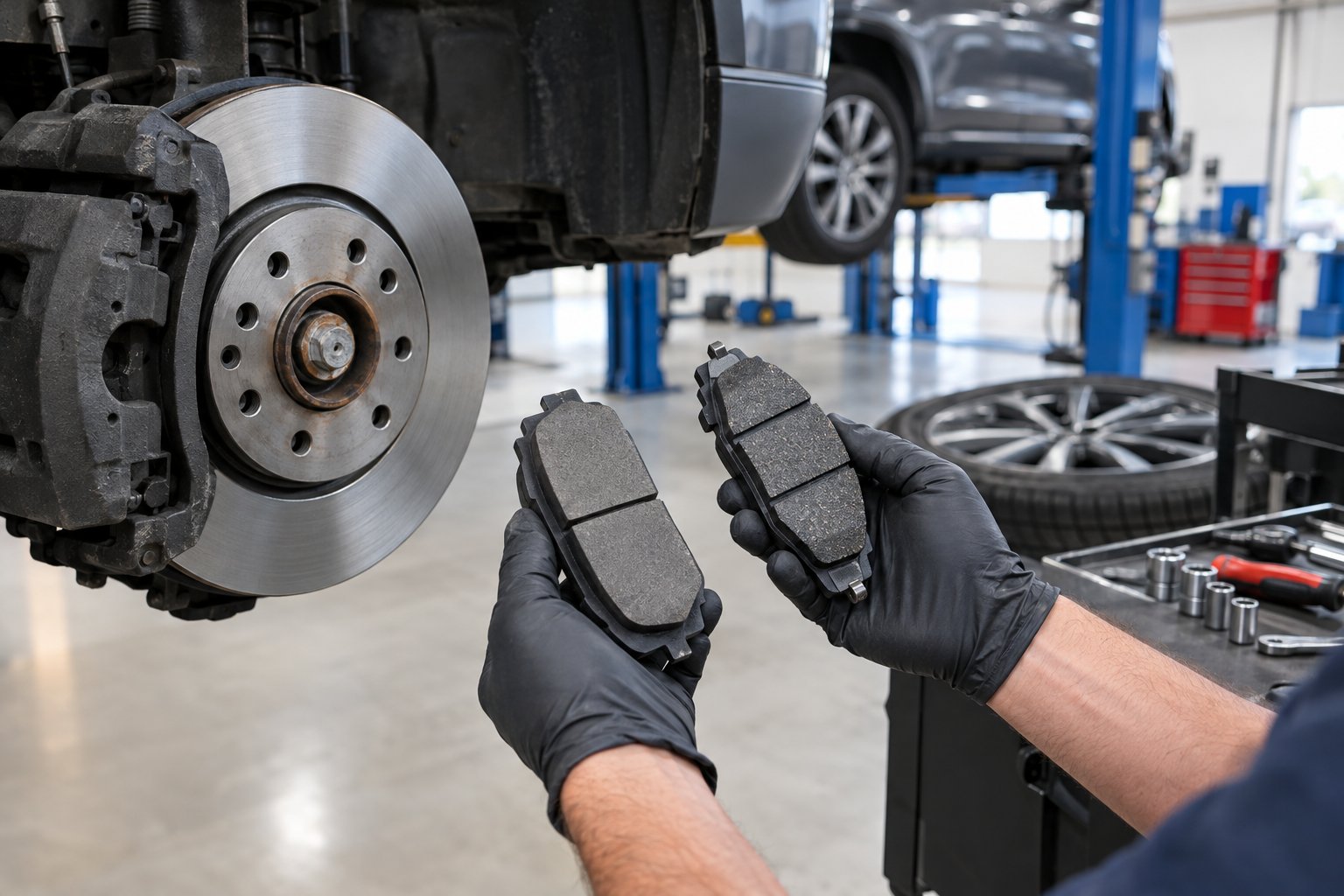
Pick by use case first: ceramic premium lines for quiet daily driving, OE-style lines for value repairs, truck-specific compounds for towing, and race compounds only for the track. Each recommendation below comes from documented product features, with the trade-offs spelled out.
| Pick | Best fit | Material | Hardware | Main compromise |
|---|---|---|---|---|
| Akebono ProACT | Daily driving | Ceramic | Many kits | Premium price |
| Wagner QS | Quiet commuting | OE-style by application | Most applications | Mid-tier shim vs. OEx |
| Raybestos R-Line | Budget repairs | Ceramic or semi-metallic | Varies | Fewer premium features |
| PowerStop Z36 | Towing, hauling | Carbon-fiber ceramic | Included | Break-in required |
| Brembo Xtra | Sporty street | Copper-free compound | Varies | Not for track |
| Hawk / Ferodo race | Track days | Race compounds | Race pads lack shims | Poor street manners |
Akebono ProACT: a Strong Choice for Everyday Driving
ProACT is Akebono’s ultra-premium ceramic line for domestic and Asian vehicles. The company lists no break-in required, ultra-low dust, and vehicle-optimized ceramic formulas among its features, and says its aftermarket pads are made in the USA.
Hardware used to be a weak spot on some part numbers. Akebono added premium 301 stainless steel abutment hardware to 192 Ultra-Premium pads, and now offers more than 400 kits with clips. New part numbers carry the hardware, so check which number you’re buying.
The trade-off: ceramic pads give a softer initial bite when cold than semi-metallic pads. If you tow often, look at a truck-specific line.
Bosch QuietCast and Wagner: Options for Quiet Commuting
Wagner splits its lineup into three tiers. The Wagner QS line uses up to a four-layer shim and a powder-coated backplate. It includes stainless hardware in most applications and has been validated on a dynamometer using SAE J2521 noise and J2522 effectiveness tests.
Wagner’s own comparison shows how much the tier matters. Wagner ES has a three-layer shim and no hardware, while OEx uses a five-layer shim, includes hardware in all applications, and covers major 2010-and-newer models. If quiet braking is your top goal, QS or OEx earns the extra cost.
Bosch QuietCast is a widely available OE-style alternative. Use the Bosch part-number lookup to confirm your exact vehicle before ordering.
Raybestos: Value-Focused Replacement Options
Raybestos R-Line is the practical pick when you want OE-consistent fit without paying for premium extras. It uses ceramic or semi-metallic friction depending on the application, so the factory material choice carries over.
Step up to Element 3 if you want longer life and cleaner wheels. That line uses a hybrid friction blend meant to combine traits of ceramic and semi-metallic pads. Raybestos also sells specialty lines for police, school bus, and Class 1 through Class 8 trucks.
ACDelco: OE and Aftermarket Options for GM Vehicles
ACDelco is GM’s parts brand, which makes it a sensible first look for Chevrolet, GMC, Buick, and Cadillac owners. It sells both GM original-equipment pads and aftermarket lines at different price points.
OE matching matters most on trucks with special rotors. One GM bulletin for 2014-2019 full-size trucks and SUVs calls for front pad kit 19369415 used together with OEM rotors. Those rotors are ferritic nitro-carburized (FNC), a hardened finish. If your GM vehicle has a bulletin, follow its part numbers.
PowerStop: Application-Specific Options for Trucks and Towing
The PowerStop Z36 Truck & Tow line targets towing, hauling, big tires, and mountain driving. It uses a carbon-fiber-reinforced ceramic formula and comes with stainless shims, stainless hardware, and high-temp lubricant in the box.
Two details to weigh: the warranty runs 90 days or 3,000 miles, whichever comes first, and the break-in procedure is mandatory. Skip it, and you risk judder.
Brembo and EBC: Options for Performance Street Driving
Brembo’s lines are clearly separated. Prime pads focus on comfort and daily use. Xtra pads use a copper-free compound built for sporty road driving, and Brembo states they are not suitable for track racing. The Xtra Ceramic line adds low dust and comfort for high-end cars, also road-only.
EBC Yellowstuff is the grippier street-performance option. Many Yellowstuff part numbers now carry ECE R90 approval, a European road-legal standard. Expect more dust and noise than a comfort ceramic.
Hawk and Ferodo: Specialized Compounds for Track Use
Race pads only work well inside their temperature window. Hawk’s HP+ has a 300-600°F optimal range and suits autocross, while ER-1 targets HPDE and track days. Hawk states its compounds are not compatible with carbon ceramic rotors, and its motorsport pads do not include shims.
Ferodo splits street and track clearly. DS Performance is recommended for road use and is ECE R90 compliant. The DS2500 averages a 0.41 friction coefficient from 0° to 500°C but lacks R90 certification, so Ferodo targets it at track days and light racing.
Which Brake Pad Material Fits Your Vehicle?
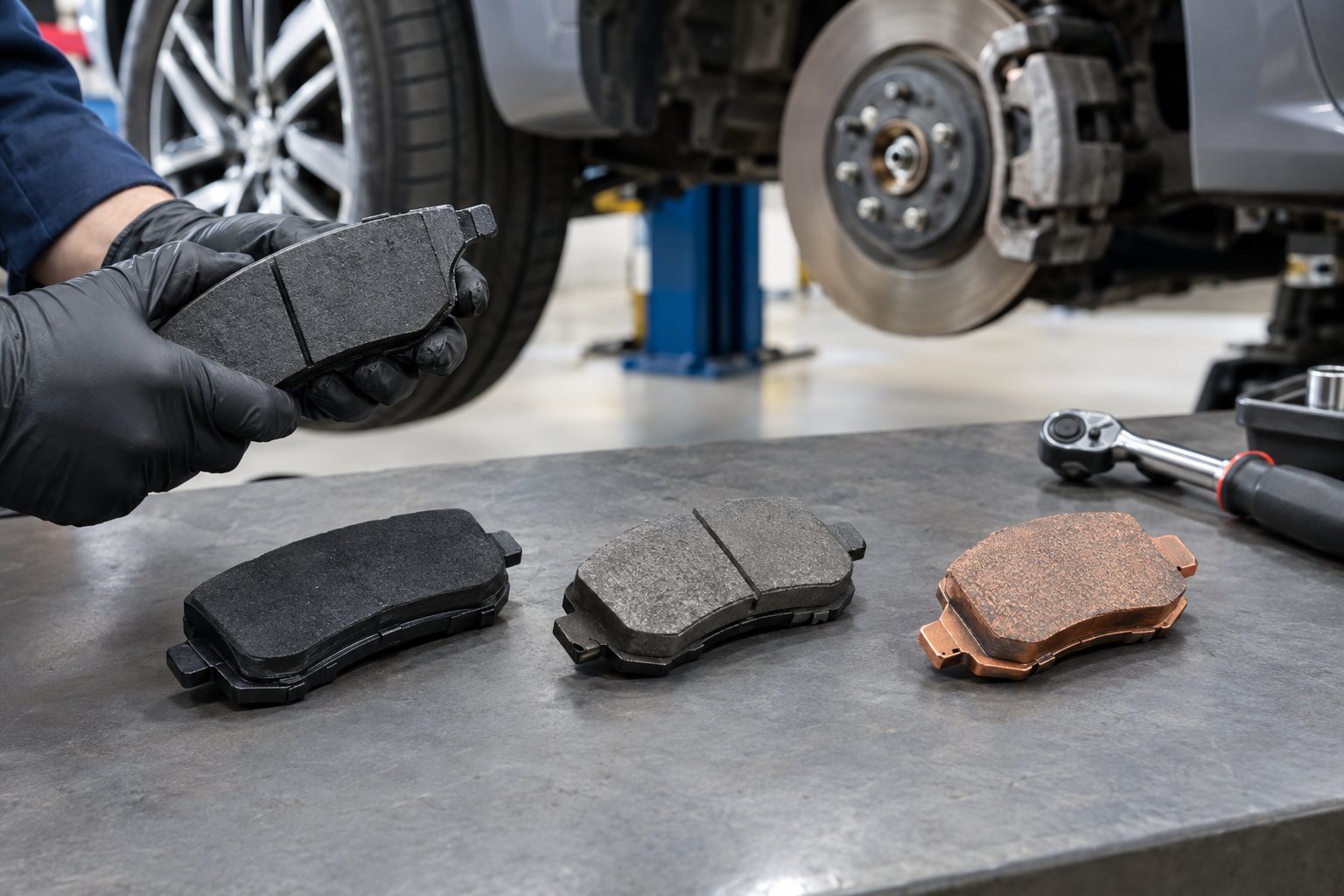
Start with the material your vehicle came with, then change it only for a clear reason like towing or dust. Ceramic suits most commuters, semi-metallic handles heat and heavy loads, and organic fits lighter cars with gentle use. A box code alone won’t tell you which works best.
Ceramic Pads: Noise, Dust, and Daily Comfort
Ceramic pads are the default upgrade for daily drivers. They tend to run quiet, leave light-colored dust that’s easier to clean, and wear rotors gently.
The compromise is cold response. On the first stop of a winter morning, a ceramic pad can feel a little less grabby than semi-metallic. Most drivers never notice, but owners of heavy trucks often do.
Ceramic does not mean light duty. Truck lines like PowerStop Z36 reinforce ceramic with carbon fiber for heavier work.
Semi-Metallic Pads: Heat Tolerance and Braking Feel
Semi-metallic pads mix steel or iron fibers into the friction material. That gives a firmer bite and better tolerance for repeated hard stops, which is why many trucks, police vehicles, and towing packages use them from the factory.
Expect trade-offs in daily life:
- More brake dust, usually dark gray
- More noise, especially at low speed
- Faster rotor wear
- Stronger feel when the pads are cold
If your vehicle shipped with semi-metallic pads, switching to ceramic can change pedal feel and fade behavior under load. Stick with the factory type unless the pad maker lists your exact use.
Organic Pads: Everyday Benefits and Limitations
Organic pads, also called NAO (non-asbestos organic), use fibers, rubber, and resins. They are the softest of the three types: quiet, cheap, and easy on rotors.
They also wear faster and lose grip sooner when hot. That makes them a fit for small, light cars driven around town, and a poor match for towing, steep grades, or spirited driving. Many economy pads use organic or low-metallic blends.
What Can DOT Friction Codes Actually Tell You?
The two-letter code on a pad’s edge (such as “FF”) rates cold and hot friction from a standard lab test. The first letter covers cold friction and the second covers hot.
That’s useful for comparing grip levels, but it has limits. SAE International states that friction codes from its J866 practice cannot reliably be used to predict brake system performance. The code says nothing about noise, dust, wear life, or rotor wear.
Use the code as one data point. Don’t treat a higher letter as proof of a better pad.
How Do You Choose the Correct Pad Set?
The correct set matches your exact brake hardware, comes from a product line built for your use, and includes the parts your car needs. Fitment comes first, then the product tier, then what’s in the box, and last the true long-term cost.
Confirm Vehicle Fitment, Brake Package, and Axle Position
Year, make, and model are not always enough. Many vehicles offer two or more brake packages depending on trim, towing package, or performance option. The pads look similar but differ in shape and size.
Use your VIN in the maker’s lookup tool when you can. Then confirm:
- Front or rear axle. Pads are sold by axle, and fronts and rears differ.
- Brake package. Check for heavy-duty, sport, or police options.
- Rotor size. Measure if you’re unsure.
- Electronic parking brake. Rear service on these cars often needs a scan tool.
Compare OE, Economy, and Premium Product Lines
Most brands sell three tiers. Economy lines restore basic braking at the lowest price, often with simpler shims and no hardware. OE-style lines aim to match factory feel. Premium lines add better shims, slotting, coatings, or longer-life friction.
Wagner shows the spread well: its OEx pads claim up to two times longer pad life based on the company’s internal testing against other Wagner lines. Treat brand-internal claims like that as comparisons within the brand.
Check Included Hardware, Wear Sensors, and Backing Plates
Small parts cause many brake complaints. Worn abutment clips let pads rattle or stick, which leads to noise and uneven wear. A kit that includes new stainless clips saves a trip back to the store.
Also check:
- Wear sensors. Some cars need electronic sensors replaced with the pads.
- Shims. Multi-layer shims help reduce squeal.
- Backing plate coating. Powder coating resists rust in salty climates.
- Lubricant. High-temp brake grease belongs on slide pins and contact points.
Weigh Purchase Price Against Wear, Dust, and Rotor Compatibility
The cheapest box can cost more if it wears out fast or chews through rotors. Compare the price per year of service, not just the shelf price.
Rotor pairing matters too. Brembo designs its pads to pair with specific discs, and GM’s truck bulletin specifies OEM FNC rotors with its pad kit. Track compounds from Hawk need iron rotors. When the pad maker names a rotor match, follow it.
What Should You Check Before Replacing Brake Pads?
Measure the pads, inspect the parts around them, and look for causes of uneven wear before buying anything. New pads won’t fix a sticking caliper, a bad hose, or rotors past their limit.
Recognize Wear Signs Without Relying on Mileage Alone
Pad life swings widely with driving style, vehicle weight, and pad type. City driving, towing, and hills all shorten it. Check thickness instead of guessing by mileage.
Brembo suggests replacing pads when friction material wears to around 1/8 inch or 3 millimeters. Your vehicle maker’s spec may differ, so follow the service manual.
Other warning signs:
- High-pitched squeal from a wear indicator
- Grinding, which can mean metal touching the rotor
- A pedal that feels lower or softer than usual
- A wear warning light on the dash
Inspect Rotors, Calipers, and Uneven Pad Wear
Compare the inner and outer pads on each side. GM’s bulletin treats a 3 mm inner-to-outer difference as uneven wear for normal highway driving, and 6 mm for heavy city driving, towing, or loads.
Uneven wear points to a problem around the pad. Common causes include binding caliper pistons, sticky guide pins, and restricted brake hoses. Check rotors for scoring, blue heat spots, and thickness below the minimum stamped on the rotor.
Replace Pads in Axle Sets and Follow Bedding Instructions
Always replace pads on both sides of an axle together. Mixing worn and new pads makes the car pull and wears parts unevenly.
After installation, bed the pads using the manufacturer’s steps. PowerStop’s procedure calls for 5 moderate to aggressive stops from 40 mph down to 10 mph, then 5 moderate stops from 35 to 5 mph, followed by about 5 minutes of cool-down driving. Avoid holding the pedal at a full stop while the rotors are hot.
Some lines, like Akebono ProACT, need no break-in. Read the box.
Know When Brake Problems Need Professional Diagnosis
See a qualified technician if you notice a pull to one side, a pulsing pedal, fluid leaks, or a wheel that stays hot after driving. GM’s bulletin has technicians spin each front wheel by hand after a test drive; a hard wheel to turn suggests brake drag.
Also get help for electronic parking brakes, ABS warning lights, or any doubt about your work. Brakes leave no room for guesswork.
Match the Pad to the Vehicle, Not Just the Brand
Choose the product line and compound that fit your driving, then confirm fitment by VIN. For quiet commuting, Akebono ProACT or Wagner QS cover most needs. For budget repairs, Raybestos R-Line keeps factory-style friction. GM owners should start with ACDelco or OE part numbers, and PowerStop Z36 suits towing and hauling.
Keep Brembo Xtra and EBC Yellowstuff for sporty street driving, and save Hawk and Ferodo race compounds for the track. Before ordering, measure your pads, check for uneven wear, confirm the axle and brake package, and plan the bedding steps for your first drive.

Leave a Reply