Your car’s braking system is one of the most critical safety components. Upgrading it can dramatically improve both performance and peace of mind.
Whether you’re dealing with faded stopping power during spirited driving or just want better control for daily commutes, the right brake upgrades can really transform your driving experience.
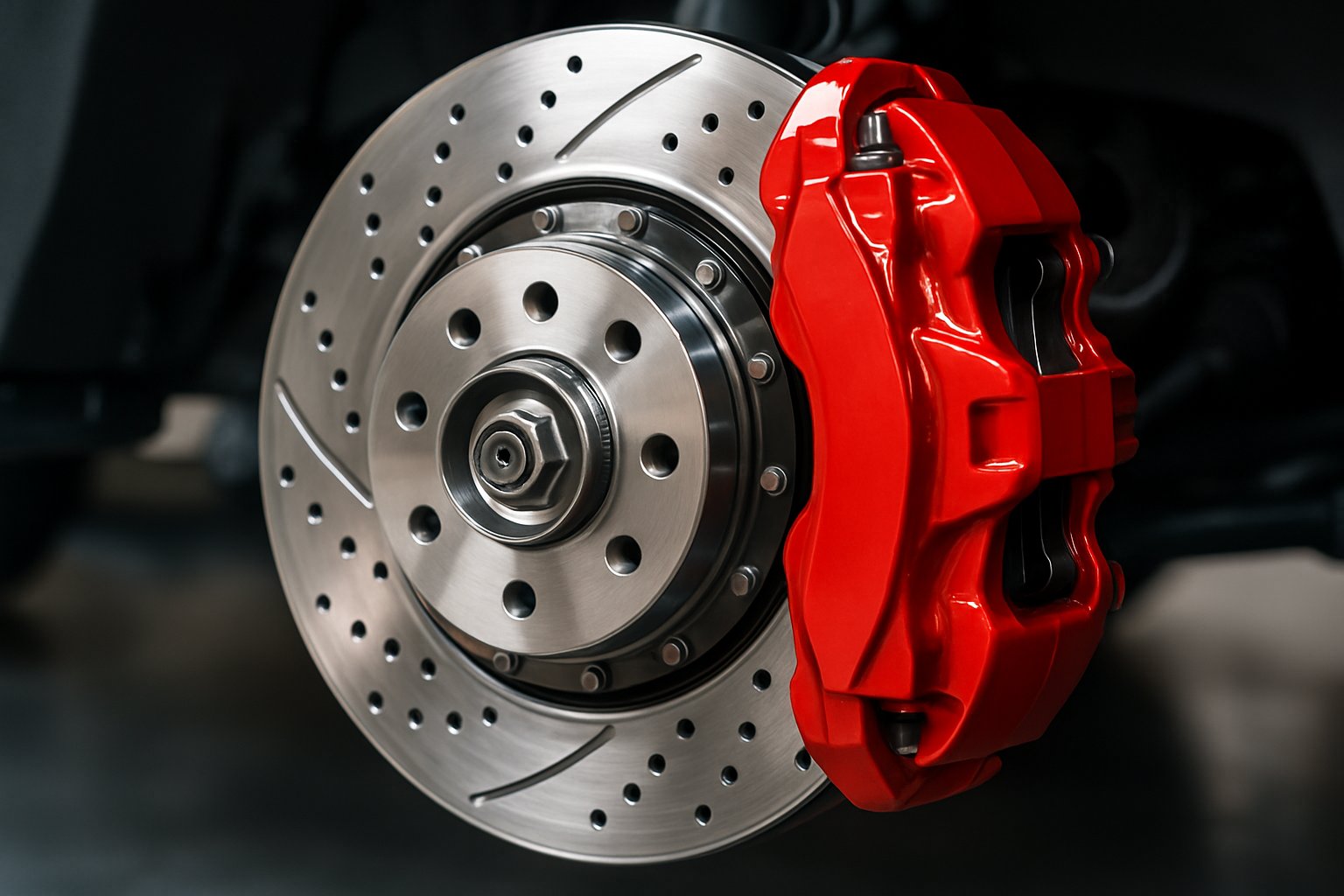
The best brake upgrades include high-quality ceramic or semi-metallic brake pads, drilled or slotted rotors, upgraded calipers, and performance brake lines. These work together to give you superior stopping power and better heat dissipation.
Each component plays a specific role in improving your vehicle’s braking, from reducing brake fade to getting rid of that spongy pedal feel.
I’ll walk you through everything from the basics of brake upgrade essentials to picking the right parts for your car and driving style.
You’ll see which upgrades make the biggest difference, how materials affect braking, and what to expect if you go pro or try a DIY install.
Understanding Brake Upgrade Essentials
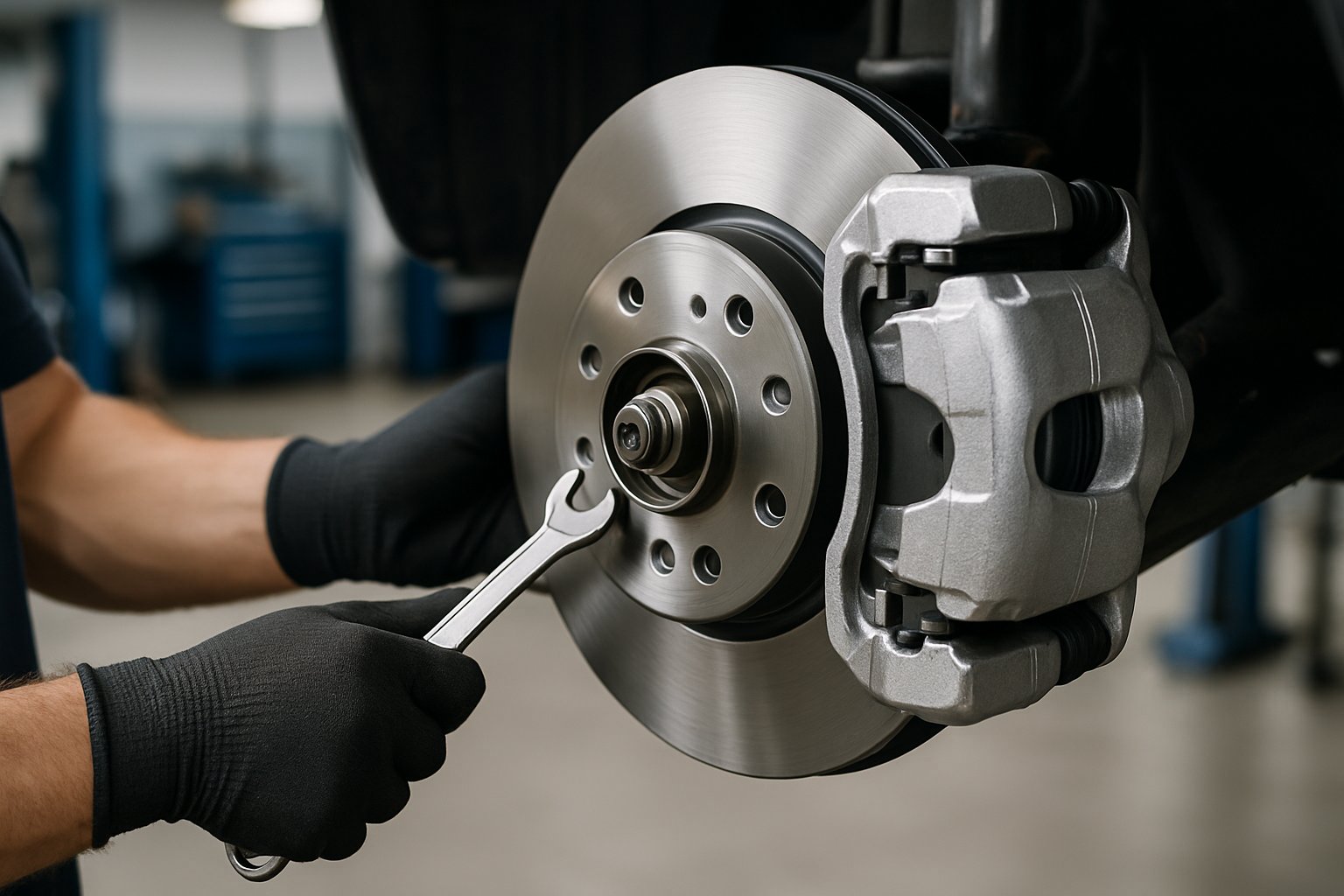
Let’s talk about why brake upgrades matter for your car’s safety and performance. If your current system isn’t cutting it, there are options that really make a difference.
Why Upgrade Your Brakes?
I recommend brake upgrades for improved safety and performance because stock brakes just can’t keep up with demanding conditions.
Factory brakes are fine for normal driving, but they definitely struggle when you push your car harder.
Performance Benefits:
- Shorter stopping distances by 10-20%
- Better heat management during hard braking
- Consistent performance on hills or mountains
- Enhanced pedal feel and responsiveness
Once you start modifying your engine, you’ll want more stopping power to match. Track days and aggressive driving show the limits of stock brakes real quick.
Your brakes fade when they get too hot, especially after repeated hard stops or long downhills. Upgraded parts handle heat way better and keep you stopping strong.
Signs You Need a Brake Upgrade
Wondering if your brakes are ready for an upgrade? Here are some signs to watch for.
Warning Signs:
- Brake fade during mountain driving
- Soft or spongy pedal feel
- Longer stopping distances than before
- Vibration through the brake pedal
- Squealing that continues after pad replacement
Your driving style matters a lot. If you drive aggressively, tow heavy loads, or take your car to the track, upgrades are almost a must.
Hot brake smell after normal driving? That’s a clue your system is working too hard—common with heavy vehicles or stop-and-go traffic in hilly areas.
Types of Brake Upgrade Systems
There are three main upgrade paths depending on your goals and budget. Each one targets different needs.
Street Performance Upgrades:
- High-carbon rotors for better heat dissipation
- Ceramic or semi-metallic pads
- Upgraded brake fluid with a higher boiling point
- Stainless steel brake lines
These are great for daily drivers who like the occasional spirited run. They’ll run you about $300-800 per axle and give a clear improvement without breaking the bank.
Track-Focused Systems:
- Multi-piston calipers for better clamping force
- Slotted or drilled rotors
- Racing brake pads
- Cooling ducts for track use
If you’re hitting the track often, these are for you. Expect to spend $1000-3000 per axle, but they’ll survive conditions that destroy street setups.
Big Brake Kits:
- Larger diameter rotors (13-15 inches)
- 4-6 piston calipers
- Complete hardware package
- Professional installation required
This is the ultimate upgrade for high-performance cars. They cost $2000-5000+ but deliver max stopping power.
Best Brake Pad Upgrades
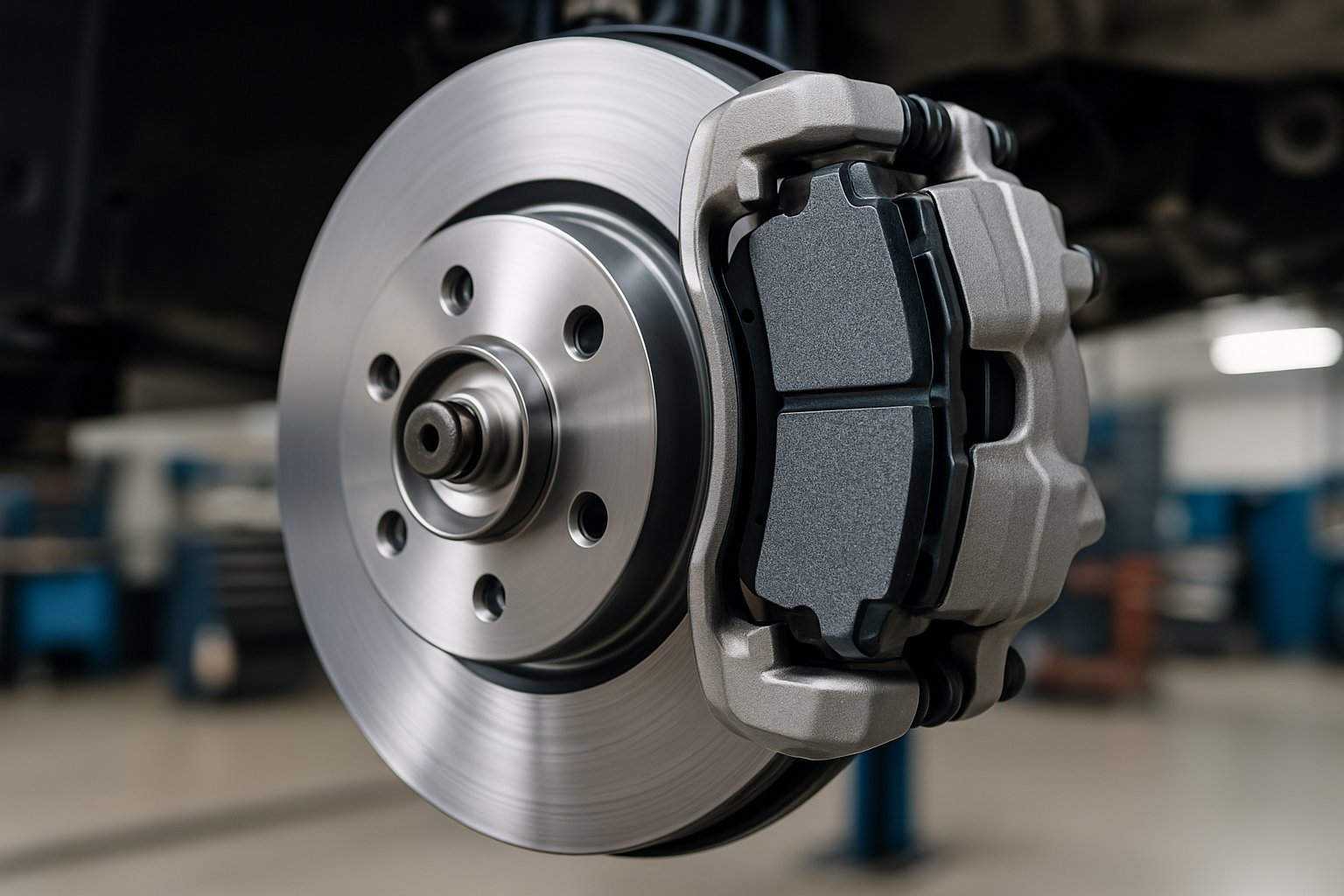
Brake pad materials directly affect your stopping power, fade resistance, and how much dust you’ll be cleaning off your wheels. Choosing between ceramic and semi-metallic pads really comes down to your driving style and what you expect from your brakes.
Performance Brake Pad Materials
There are three main brake pad materials I usually recommend. Each has its own perks depending on what you need.
Ceramic brake pads are best for daily driving. They’re quiet, make less dust, and handle up to 1,200 degrees without fading.
Semi-metallic pads have 30-70% metal fibers. They transfer heat well, work in cold weather, and last longer, but you’ll notice more dust.
Carbon fiber brake pads are the premium pick. They don’t fade at extreme temps and always give strong stopping power. High-performance brake pads can handle the demands of high-horsepower cars with fade resistance up to 1,500 degrees.
Racing compounds use specialized materials like carbon-carbon or carbon-metallic. These only work at high temps—don’t use them on the street.
Choosing the Right Brake Pads
I always try to match pad selection to how you drive and what your car needs. Your choice can impact performance, how long they last, and even what you’ll spend on maintenance.
Daily commuting is where ceramic pads shine. They’re quiet, low-dust, and give a nice smooth pedal feel in traffic.
Performance driving calls for semi-metallic or carbon fiber pads. They can handle repeated hard stops without losing grip, even when hot.
Truck and SUV owners should look at semi-metallic pads for towing. The metal helps dissipate heat from heavy loads and trailers.
Vehicle weight matters a lot in pad choice. Heavier vehicles need compounds that won’t wear out fast under pressure.
Budget is a factor, too. Aftermarket brake pads can be huge upgrades over stock, but go too cheap and you might regret it.
Ceramic vs. Semi-Metallic Pads
Let’s compare these two popular options based on what actually matters day-to-day.
| Feature | Ceramic Pads | Semi-Metallic Pads |
|---|---|---|
| Dust Production | Very Low | High |
| Noise Level | Quiet | Moderate to Loud |
| Heat Resistance | Good (1,200°F) | Excellent (1,400°F+) |
| Cold Weather | Fair | Excellent |
| Lifespan | 60,000-70,000 miles | 40,000-50,000 miles |
| Cost | Higher | Lower |
Ceramic pads are all about comfort and keeping your wheels clean. They’re quiet, low-dust, and work best in moderate climates, though they can feel a bit soft in freezing temps.
Semi-metallic pads are for those who want max stopping power and heat management. They bite hard right from the start, but you’ll see more dust and sometimes hear a squeal during light braking.
Honestly, a lot of performance drivers swap between semi-metallic for track days and ceramic for daily use. It’s a solid way to get both performance and comfort.
Top Brake Rotor Options
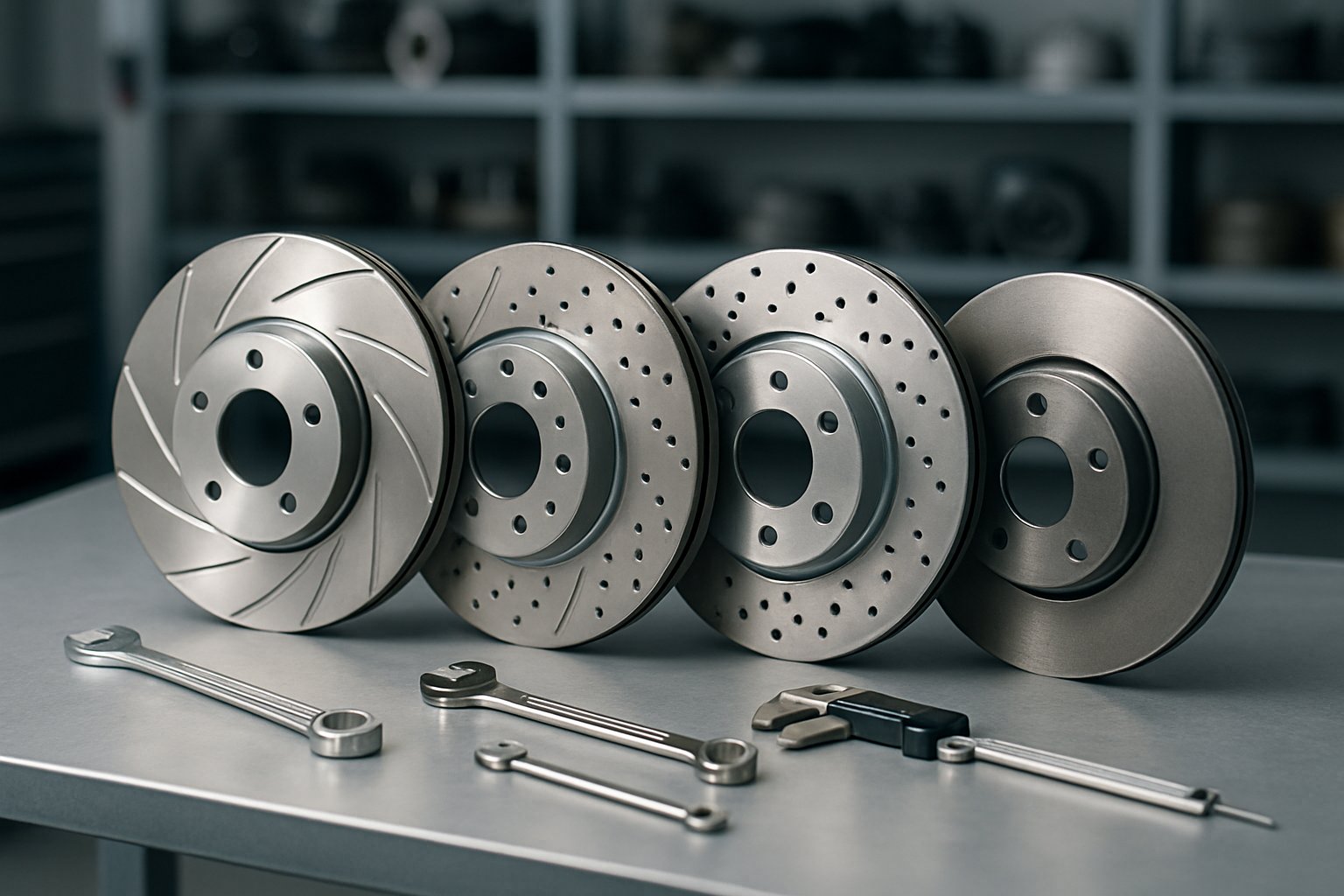
Brake rotors come in a few designs that really affect cooling, performance, and how long they last. Material and size both play a big role in how well your brakes handle heat and stop your car.
Slotted Rotors vs. Drilled Rotors
Slotted rotors have curved channels cut into them. These slots clear away brake dust and gases that can build up. I find slotted rotors work well for daily driving and light performance use.
The slots also help pads bite better by cleaning their surface. This design is tough under heavy use since slots don’t create the weak spots that holes do.
Drilled rotors have holes punched through the metal. The holes help cool things off by letting air flow through, and they look kind of sporty. But they can crack around the holes if you push them too hard.
Cross-drilled rotors are best for lighter cars or street driving. I wouldn’t use them for track days or heavy trucks since the holes can become stress points.
Slotted and drilled rotors mix both features. They are cool and clean well, but you’ll pay a bit more. The Detroit Axle brake kit with drilled and slotted rotors is a good example of handling different conditions.
High-Performance Rotor Brands
Raybestos R-Line is a solid pick for most drivers. Good quality, fair price, and Raybestos R-Line rotors are a great aftermarket choice without paying OEM prices.
Brembo is the go-to for premium rotors, especially on sports cars. They handle high heat like champs, but you’ll pay for it. If you’re into performance or track days, Brembo is worth a look.
StopTech is all about racing and performance. Their rotors use advanced cooling designs and materials—great for autocross or track use.
EBC offers a range of rotors for different needs. Their dimpled and slotted rotors are a nice middle ground. Power Stop and Centric also make reliable rotors for daily drivers.
Rotor Sizing Considerations
Diameter is key to stopping power. Bigger rotors mean more leverage and better heat management. Jumping from 12-inch to 13-inch rotors can really change how your brakes feel.
Thickness matters for durability and heat capacity. Thicker rotors last longer and resist warping under hard braking.
Vane design is important for cooling, especially in vented rotors. Curved vanes move more air than straight ones, helping prevent fade during repeated stops.
Weight matters for performance cars. Lighter rotors reduce unsprung weight and help handling. Two-piece rotors save weight, but they’re pricey compared to one-piece.
Always check your car’s specs before going bigger on rotors. Larger ones might not fit inside your wheels, and you might need different pads.
Upgrading Brake Calipers
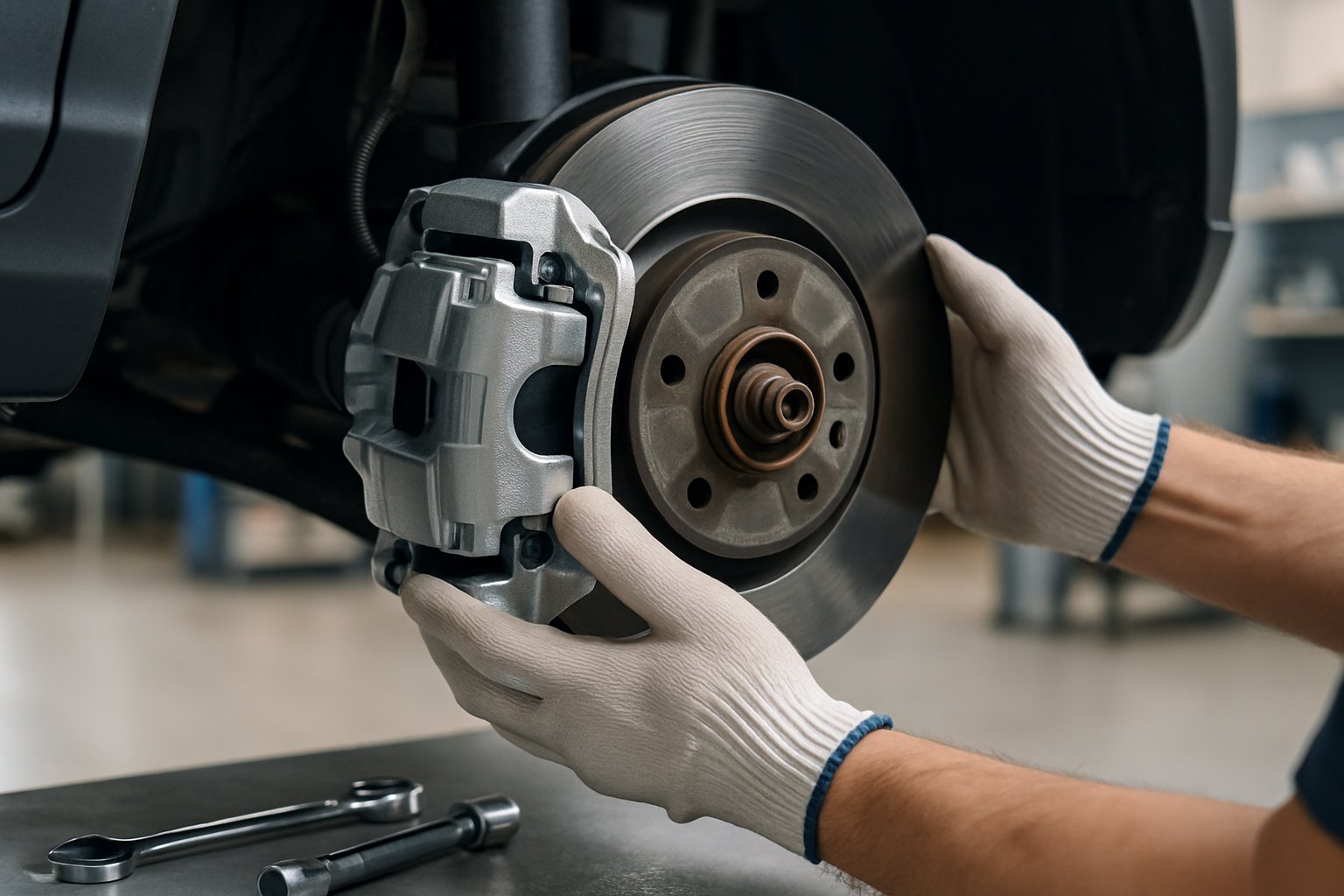
Multi-piston calipers offer more even pad pressure and better heat distribution than single-piston types.
Fixed calipers mount rigidly to the suspension, while floating calipers slide on pins to center over the rotor.
Benefits of Multi-Piston Calipers
Multi-piston calipers use several pistons instead of one big one.
This spreads pressure across the whole brake pad.
Even Pressure Distribution
Single-piston calipers tend to wear pads unevenly since pressure focuses on one spot.
Multi-piston setups distribute force better across the pad.
Improved Heat Management
Multiple small pistons deal with heat more effectively than a single large piston.
Brake fluid stays cooler, which helps during hard braking.
Better Brake Feel
Multi-piston calipers give a more precise pedal feel.
The extra contact area means you get better control over braking force.
I can tell the difference right away when switching to a multi-piston setup—the pedal feels sharper and more predictable.
Common Configurations
- 4-piston: Good mix of performance and price
- 6-piston: Better for heavier vehicles or track days
- 8-piston: All-out performance for racing
Performance brake calipers need a balanced system to work properly.
Fixed vs. Floating Calipers
The way calipers mount affects how they press pads against rotors.
Each design has its own perks depending on the use case.
Fixed Caliper Design
Fixed calipers bolt straight to the suspension or hub.
Pistons sit on both sides of the rotor and push in at the same time.
These calipers offer rigid mounting and precise pad alignment.
You’ll usually find them on race cars or high-performance vehicles.
Floating Caliper Design
Floating calipers only have pistons on one side.
The caliper slides on pins to center itself over the rotor when braking.
Most stock brake systems use floating calipers since they’re cheaper to make.
They also self-adjust as rotors wear or develop runout.
Performance Comparison
| Feature | Fixed Calipers | Floating Calipers |
|---|---|---|
| Rigidity | Excellent | Good |
| Pad wear | Very even | Even |
| Cost | Higher | Lower |
| Weight | Heavier | Lighter |
| Maintenance | Low | Moderate |
Maintenance Differences
Fixed calipers need less maintenance since there aren’t as many moving parts.
Floating calipers require regular pin cleaning and lubrication.
Stuck pins lead to uneven braking and early pad wear. I always check the pin movement during brake service.
Upgrading brake calipers is a solid way to boost braking performance and cut down on fade when things get hot.
Performance Brake Lines and Fluids
Upgrading to stainless steel brake lines and using high-temp brake fluid makes the system feel way more responsive.
These upgrades help keep pedal feel consistent and stop brake fade when you’re pushing the car.
Stainless Steel Brake Lines
I always suggest swapping out rubber lines for stainless steel braided ones.
Stainless steel brake lines withstand high pressure and corrosion and deliver a firmer pedal.
Rubber lines tend to expand under pressure, making the pedal feel squishy.
With stainless lines, the pedal feels immediate—no delay when I hit the brakes.
Key Benefits:
- Firmer pedal
- Better brake modulation
- Lasts longer than rubber
- Resists debris and chemicals
Installing these lines means you need to bleed the system fully.
I always use proper flare tools and fittings to avoid leaks.
Most sets run about $80-200, depending on the car.
Some high-performance cars need bigger lines to handle more fluid.
Choosing High-Temperature Brake Fluid
I go with high-temp brake fluid if I know I’ll be braking hard.
Performance brake fluid has a higher boiling point than standard fluid, so it won’t vaporize under pressure.
Brake Fluid Types:
| Type | Dry Boiling Point | Wet Boiling Point |
|---|---|---|
| DOT 3 | 401°F | 284°F |
| DOT 4 | 446°F | 311°F |
| DOT 5.1 | 500°F | 356°F |
For performance, I stick to DOT 4 or DOT 5.1.
They can handle the heat from repeated hard stops.
High-temp fluid keeps fade at bay when things get intense.
I swap out brake fluid every year or two because it absorbs moisture and loses effectiveness over time.
Best Complete Brake Kits
Complete brake kits are the easiest way to upgrade everything at once—rotors, pads, calipers, and hardware.
Brands like Brembo, EBC, and PowerStop are the big names here, and for good reason.
Top-Rated Brake Kit Brands
There are a few top kit makers I trust for quality and results.
Brembo leads the pack with their multi-piston calipers and ventilated rotors—serious stuff for racing and performance.
EBC gives you great value with full kits, including dimpled and slotted rotors for better heat management.
Their pad compounds work for both street and light track days.
PowerStop is solid for daily drivers.
Their Z23 Evolution kits use ceramic pads and cross-drilled rotors, aiming for less dust but still good stopping power.
Big brake kits with larger rotors are available from these brands if you want max performance.
Multi-piston calipers help spread pressure across the whole pad.
What to Look For in a Brake Kit
I go for kits that come with all the hardware you need.
It’s just easier and saves time hunting for extra parts.
Rotor design is a big deal.
Cross-drilled rotors cool better but can crack if abused; slotted rotors are tougher and still help with heat.
Caliper piston count changes the feel—four-piston is a big step up over single-piston, and six-piston is even better (but costs more).
Pad compound matters too.
Ceramic pads make less dust but might not love high temps; semi-metallic pads handle heat better but dust more.
I always double-check fitment for my car before buying anything.
Installation Tips and Maintenance
How well you install your brakes really affects how they perform.
Regular maintenance keeps things safe and working right.
Getting a pro to do complex jobs costs more, but DIY works if you’ve got the tools and patience.
Professional Installation vs. DIY
For tough jobs—like hydraulic systems and brake fluids—I lean toward professional installation.
Bleeding and calibrating these systems takes experience.
Professional Installation Benefits:
- Labor warranty
- Correct torque specs
- Special brake bleeding gear
- Knows how to route lines properly
DIY is fine for basic stuff like pads and rotors.
Just make sure you have these essentials ready:
- Brake caliper tool
- Torque wrench
- C-clamps
- Brake cleaner
- Safety glasses
Common mistakes include skipping proper bedding, using dirty fluid, or missing torque specs.
Those problems can cause noise, vibration, or early wear.
DIY Time Requirements:
- Brake pads: 2-3 hours per axle
- Rotors: 3-4 hours per axle
- Full brake kit: 6-8 hours
Routine Maintenance for Upgraded Brakes
I check my upgraded brakes every 6,000 miles. That seems to keep performance sharp, at least in my experience. Performance brake upgrades need more attention than standard brakes, mostly because they run hotter.
Monthly Inspections:
- Brake fluid level and color
- Pad thickness through wheel spokes
- Rotor surface condition
- Brake line wear or damage
I flush brake fluid every 18 months with upgraded systems. High-performance brakes just seem to chew through fluid faster than regular ones.
Stainless steel braided brake lines are tougher, but I still check for fraying or kinks. I swap them out every 5 years, no matter how they look.
Performance Brake Maintenance Schedule:
- Every 3 months: Visual inspection
- Every 6 months: Measure pad thickness
- Every 18 months: Brake fluid flush
- Every 2 years: Complete system inspection
I hit the rotors with brake cleaner after every 10,000 miles. It helps clear off brake dust, which can really mess with stopping power if you let it build up.


Leave a Reply