Your car pulls to one side when you brake, you hear strange noises, or you smell something burning near your wheels. These problems might point to failing caliper slide pins—small but critical parts that help your brakes work properly.
Bad caliper slide pins typically show symptoms like uneven brake pad wear, the car pulling to one side under braking, overheating smells or smoke from a wheel, and clunking sounds over bumps. I’ve seen a lot of drivers ignore these warning signs, which can lead to expensive repairs and, honestly, some sketchy driving situations.
Spotting these symptoms early can save you a headache, some money, and maybe even keep you safer. Let’s break down the warning signs, what causes these pins to go bad, and how you can check things out before they get worse.
What Are Caliper Slide Pins?
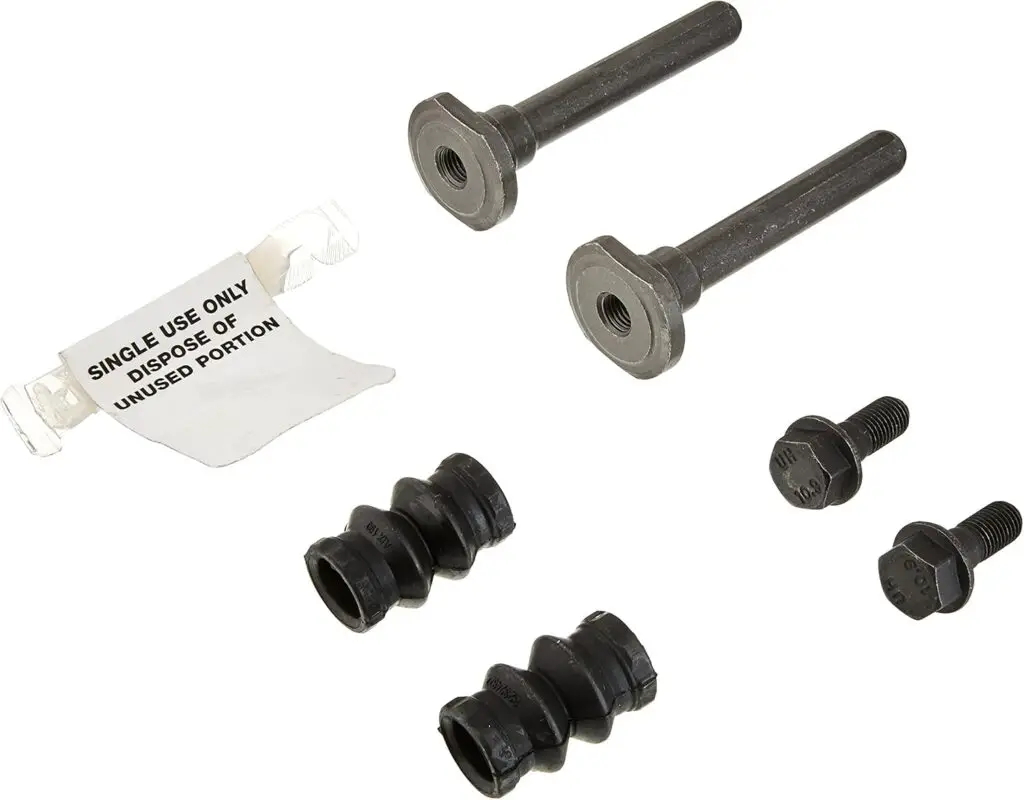
Caliper slide pins are just metal rods, but they let your brake calipers move smoothly when you press the brake pedal. They make sure both brake pads hit the rotor evenly so your car can actually stop like it should.
Function in the Braking System
Brake caliper pins help your brake caliper move smoothly and evenly when you hit the brakes. It’s not rocket science, but it’s pretty important.
When you press the pedal, brake fluid pushes a piston inside the caliper. That piston jams one brake pad against the rotor.
The caliper body slides inward, guided by the slide pins. This movement pulls the outer brake pad against the other side of the rotor.
This sliding action is pretty much essential. If the slide pins get stuck, only one pad really does its job. The other pad might barely touch the rotor or just stick there.
Key functions include:
- Letting the caliper move smoothly
- Ensuring both brake pads contact the rotor
- Preventing pad binding
- Allowing the brakes to release properly
Types of Caliper Slide Pins
Most cars use one of two main slide pin styles. The differences change how they work and how long they last.
Bolt-style slide pins screw right into the caliper bracket. These have a smooth shaft that slides through bushings or sleeves. You’ll see these on a lot of passenger cars and light trucks.
Guide pin assemblies come with separate bushings and boots. The pin slides through a rubber or metal bushing inside the bracket. This setup tends to last longer because it shields the pin better.
Some pins have rubber boots that run the whole length. Others just cover the tip. Longer boots keep out more grime and water, so I prefer those if I get a choice.
Pin diameter varies—most are between 10mm and 15mm wide. Longer pins add stability, but honestly, they can be a pain to service.
Materials and Durability
Most slide pins are made from hardened steel and have special coatings. The coating keeps rust at bay and helps the pin slide smoothly through its bushing.
Common coatings include:
- Zinc plating – Basic rust protection
- Chrome plating – Smoother and tougher
- Stainless steel – Best for corrosion resistance
- Teflon coating – Less friction, less sticking
The rubber boots are just as important. They keep water, salt, and dirt away from the pins. You should really swap in new boots every time you do brake pads. They’re cheap and can save you big headaches.
With good maintenance, quality slide pins can last 100,000 miles or more. But corrosion is the biggest killer of slide pins.
Heat from braking will eventually break down the coatings. Add road salt and moisture, and things can go downhill fast.
Common Symptoms of Bad Caliper Slide Pins
Bad caliper slide pins throw up a bunch of warning signs if you know what to look for. You might notice uneven brake pad wear or your car pulling to one side when you hit the brakes.
Uneven Brake Pad Wear
Uneven brake pad wear is probably the clearest sign of stuck slide pins. When the pins don’t move right, the caliper can’t press both pads against the rotor evenly.
The inner pad usually wears down way faster than the outer. The piston pushes the inner pad, but if the slide pins are stuck, the caliper can’t pull the outer pad in with enough force.
If you check your brake pads during routine maintenance, you’ll want to see even wear. Healthy pads should look about the same thickness on both sides.
Sometimes, the difference is so bad that one pad looks almost new while the other is paper-thin. That’s a big red flag; your slide pins need some love.
Brake Noise and Squealing
Strange noises are a dead giveaway. The most common is a metallic squealing or grinding, especially when you brake.
Stuck slide pins make the brake pads drag on the rotor all the time. You might hear scraping even when you’re not braking. Usually, the noise comes from just one wheel, which helps you track down the culprit.
There’s also that clunk over bumps when worn pins rattle around. The caliper shifts position because the pins aren’t holding it steady.
High-pitched squealing during braking often means the pads are wearing unevenly. The vibration from the uneven surface makes that squeal you feel through the pedal and sometimes the steering wheel.
Pulling to One Side While Braking
If your car pulls to one side when you brake, one of your caliper slide pins might be sticking. This pulling under braking happens because the affected wheel isn’t braking as hard as the other side.
The pull usually goes toward the side with the stuck caliper. So if your right front pins are jammed, your car will veer right when you brake.
This pulling is most noticeable during moderate or hard braking. Light taps on the pedal might not show the problem, but slam the brakes and you’ll definitely feel it.
The steering wheel can also vibrate or feel a bit shaky. That’s because the brakes aren’t working evenly, so the car doesn’t track straight.
Reduced Braking Performance
If your slide pins are toast, you’ll notice it takes longer to stop. Stuck pins stop the pads from making full contact with the rotor, so your brakes just aren’t as strong.
The pedal might feel spongy, or you’ll need to press harder to get the car to slow down. That’s because the caliper isn’t sliding freely, so both pads aren’t clamping down properly.
Heat becomes a real issue when pins are stuck. You might smell something burning or even see smoke from a wheel after driving, especially if you’re in stop-and-go traffic or you’ve been braking hard.
The problem just gets worse with time as the pins keep causing uneven wear. If you ignore it, you could lose a lot of braking power on that wheel—definitely not something you want to risk.
Visual and Physical Signs to Watch For
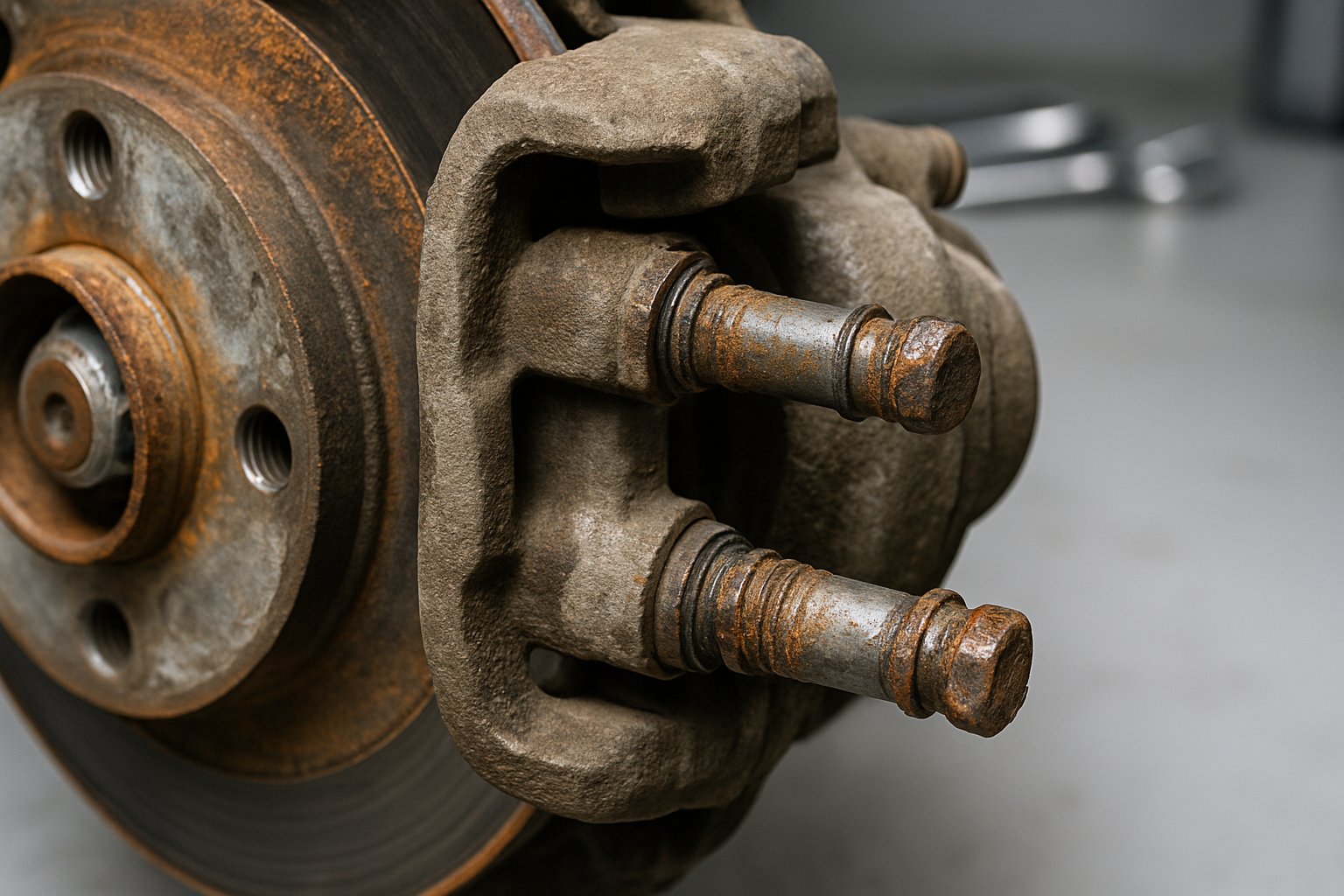
You can spot bad caliper slide pins by checking for rust, seeing if the caliper moves smoothly, or looking for grease leaks around the pin area. Sometimes these clues show up before you even notice any weird driving behavior.
Rust or Corrosion on Pins
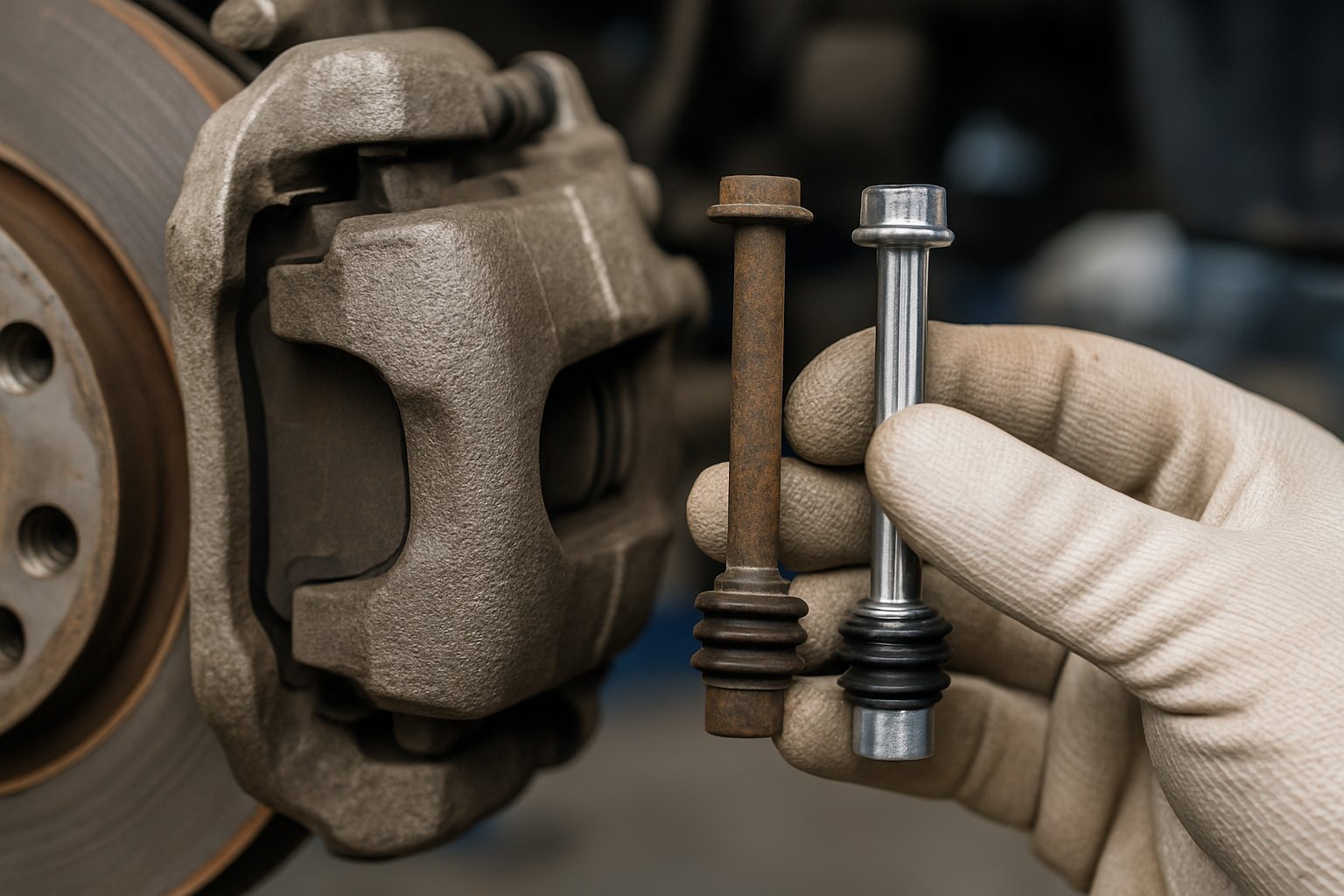
Look for orange or brown rust on the pins themselves. Corrosion can build up and make the caliper seize.
The pins should look shiny and smooth. If you see rough patches or rust, sliding is going to be a struggle.
Check the pin boots for cracks or tears. Those rubber covers keep out moisture and dirt. Once they’re damaged, water gets in, and rust starts fast.
Signs of corroded pins:
- Orange or brown spots
- Rough, pitted surfaces
- Flaky metal bits
- Torn or cracked boots
- White or green powdery stuff
Sometimes you have to pull the pins out to see corrosion that’s hiding inside the bracket. It’s sneaky like that.
Sticking or Binding Caliper
You can test pin movement by gently moving the slide pins in and out with a pry bar. They should move smoothly, no sticking or grinding.
If the caliper feels tight or only moves partway, that’s a bad sign. You might have to use more force than you should.
Uneven brake pad wear is another tip-off. Bad guide pins usually show up as uneven pad wear. One pad will wear down a lot faster.
How do I check pin movement:
- Lift the wheel off the ground
- Remove the caliper bolts
- Slide the caliper off the rotor
- Push and pull each pin by hand
- Feel for smooth, easy movement
The caliper should glide on both pins. If there’s any binding, the pins need to be cleaned up or replaced.
Leaking Lubricant
I look around the slide pin boots for grease spots or any wet areas. Fresh lubricant should stay tucked inside the pin housing, not end up outside.
If I spot dried or hardened grease on the outside, it usually means the boots are leaking. Old grease tends to look dark brown or black, not that fresh yellow or clear shade you want to see.
Sometimes I’ll check the ground under my parked car for little grease spots near the wheels. These look different from brake fluid—brake fluid is thinner and almost clear.
Signs of lubricant problems:
- Grease spots on brake parts
- Dried, dark residue around boots
- Low or missing grease inside the pins
- Grease mixed with dirt
When lubricant leaks out, dirt and moisture sneak in. That mess turns into a gritty paste that chews up the pins and caliper bracket holes.
If I find a leak, I swap out both the grease and the pin boots. Just adding new grease won’t fix damaged seals—wish it were that easy.
Causes of Caliper Slide Pin Failure
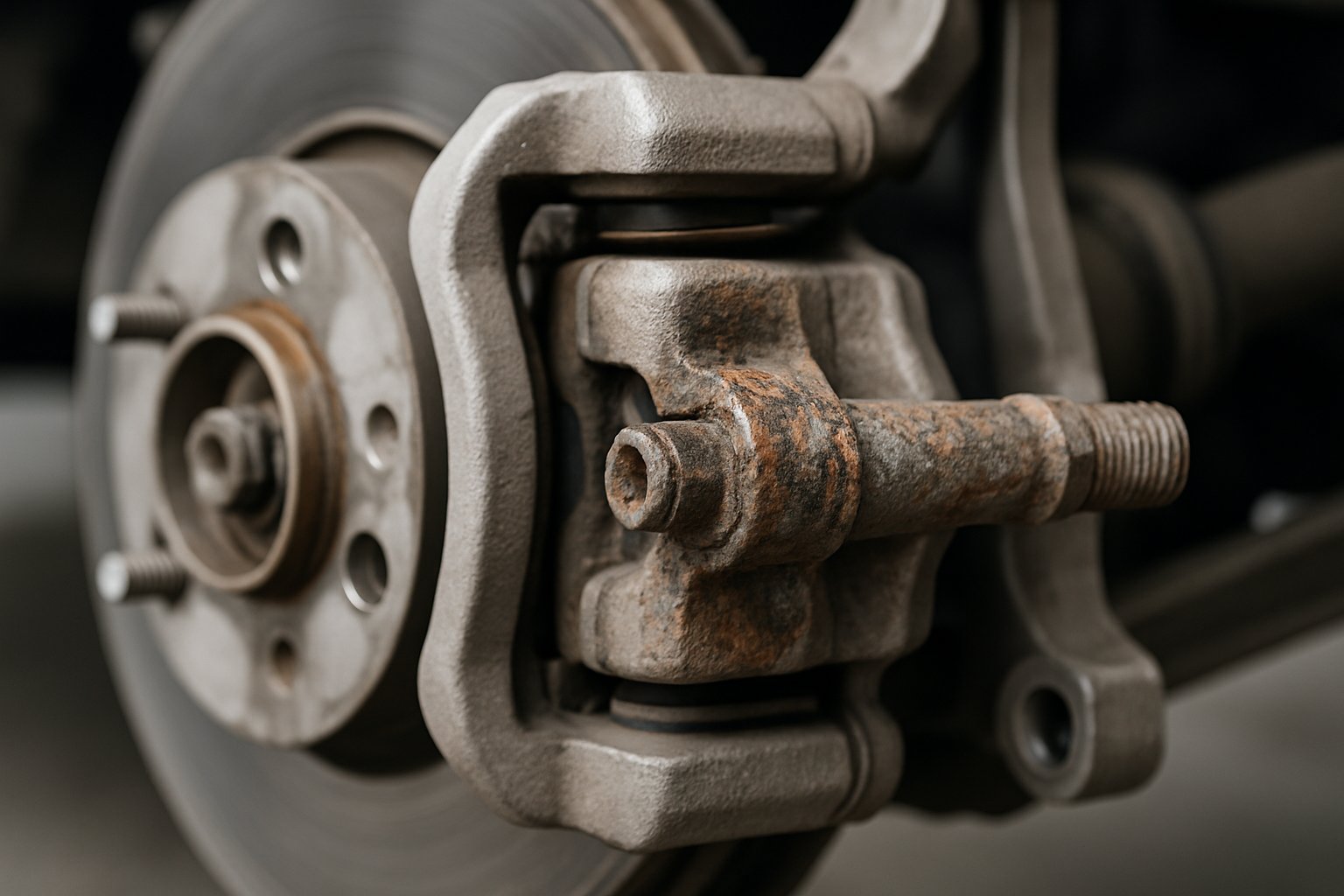
Caliper slide pins run into trouble when their barriers fail, letting rust and corrosion take over. The usual suspects? Not enough lubrication, dirt and moisture sneaking in, and busted rubber seals that leave pins exposed to the elements.
Lack of Lubrication
Good lubrication keeps slide pins gliding smoothly in their bores. When grease is missing, you get metal-on-metal contact, which means friction and heat.
That friction can make the pins bind or stick. Slide pins live in a hostile environment, and when the grease breaks down, problems show up fast.
Signs of inadequate lubrication include:
- Pins that fight you when you pull them
- Rust or corrosion on the pins
- Dried or missing grease on threads
- Squealing noises when braking
I try to check the pin lubrication every time I do brake work. Some fresh, high-temp brake grease can really make a difference and save you a headache down the road.
The caliper bracket bores also need a bit of grease. If they’re dry, the pins will bind and not move like they should.
Contamination and Debris
Water, salt, and dirt love to get in through damaged seals and attack slide pins. Rust is the number one enemy since pins and bores are all metal.
Road salt makes things worse in winter. It speeds up corrosion by starting an electrochemical reaction that eats away at the metal.
Common contamination sources:
- Road salt – Eats metal fast
- Moisture – Helps rust form
- Brake dust – Acts like sandpaper
- Dirt particles – Cause more wear
Once contamination gets in, smooth pin bores turn rough and pitted. That roughness makes pins stick and bind.
Sometimes pins get so rusty that they’ll snap when you try to pull them out. Regular cleaning and resealing can stop things from getting this bad.
Worn or Damaged Rubber Boots
Rubber boots are supposed to keep the pin bores sealed up tight. If the boots crack or tear, they can’t protect anything anymore.
Caliper slide pin problems often start with rubber parts breaking down and letting in moisture.
Heat cycles make rubber brittle over time. When it gets cold, brittle boots crack as the pins move during braking.
Boot damage indicators:
- Cracks or splits in the rubber
- Boots pulling away from where they mount
- Hard, stiff rubber
- Pieces of the boot are missing
If boots look rough during a brake job, I just replace them. They’re cheap compared to what it costs to fix seized calipers.
Torn boots basically give water and dirt a free pass to the slide pins. Once that happens, corrosion gets going right away and only gets worse from there.
How Bad Slide Pins Affect Safety
If slide pins stick or fail, you’re looking at some real braking problems that can put you in danger. The big stuff? Way longer stopping distances and fast destruction of expensive brake parts.
Longer Stopping Distances
Bad slide pins mean your car takes way longer to stop, especially in an emergency. When pins stick, only one brake pad pushes on the rotor, so you’re only getting half the stopping power on that wheel.
I’ve seen cars need 50% more distance to stop when the pins are shot. It’s honestly scary how much worse it gets if you have to slam on the brakes.
Things get even sketchier during panic stops. The car pulls hard to one side because the brakes aren’t working evenly. Steering straight becomes a challenge.
Sticking brake caliper guide pins usually show up as the car pulling to one side when you brake. You might not notice it just driving around, but it’s a real problem if you need to stop quickly.
Critical stopping distance increases:
- Normal roads: 20-30% longer
- Wet roads: 40-50% longer
- Emergency stops: Up to 60% longer
Increased Rotor and Pad Wear
Stuck slide pins chew through brake pads and rotors way faster than normal. If pins can’t move, one pad stays pressed against the rotor all the time.
This creates constant heat and friction. I’ve seen rotors get warped or even cracked from too much heat.
The pad that sticks usually wears down to the metal in just a few thousand miles. The other pad might still look nearly new, which is just weird to see.
Bad caliper slide pins cause unbalanced wear on the pads. You’ll be replacing parts a lot more often, which gets expensive fast.
Typical wear patterns:
- One pad gone, the other fine
- Rotor scored or warped
- Blue spots from overheating
The heat can also wreck rubber seals and even the brake fluid. If you ignore it long enough, you might lose your brakes completely.
Diagnosis and Inspection Methods
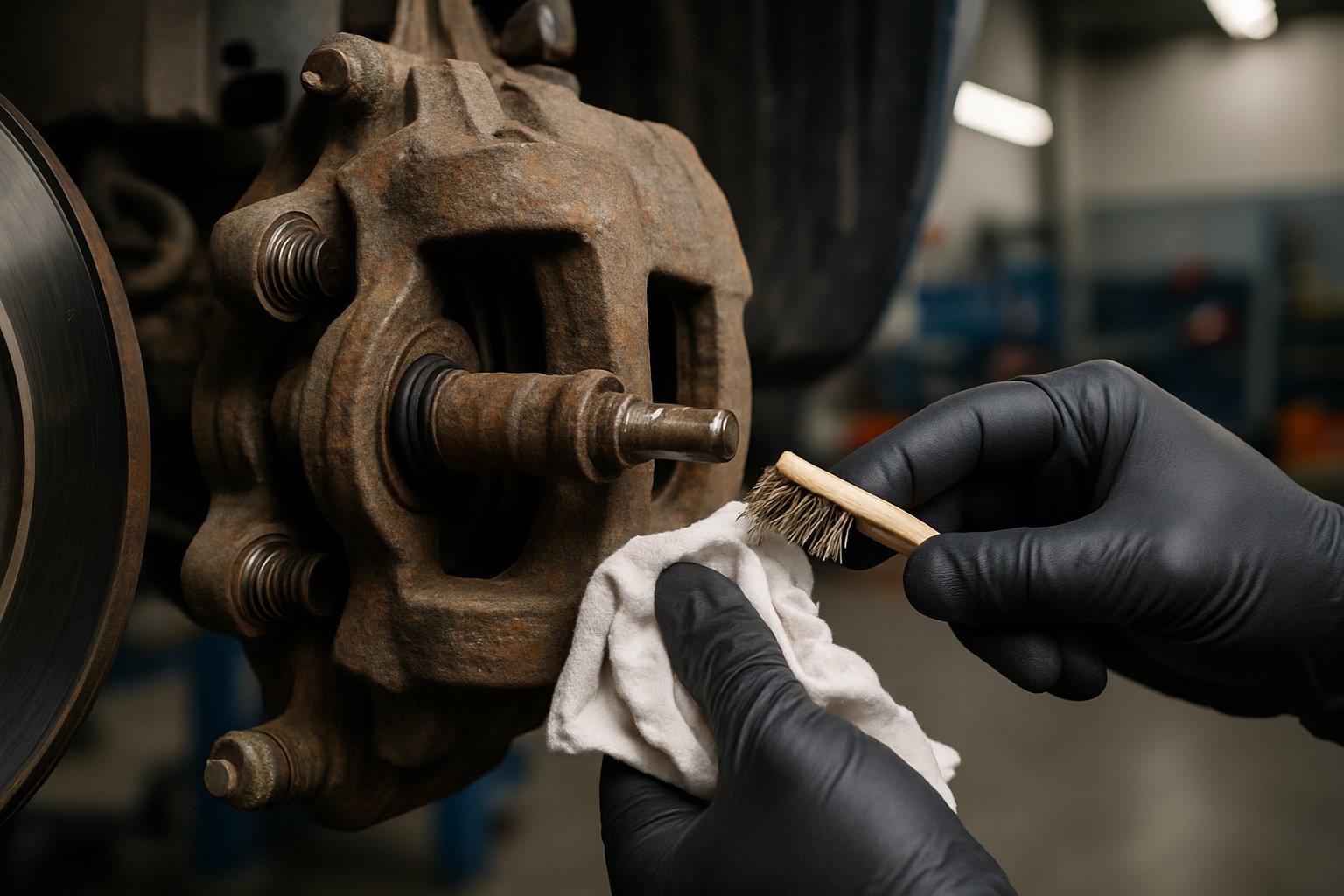
I usually confirm bad caliper slide pins with two main tests. There’s the manual movement test, and then there’s checking for brake drag.
Manual Pin Movement Test
I start by lifting the car and pulling the wheel off to get at the caliper. The caliper has to come off the rotor so I can really check the pins.
I pull each slide pin by hand to see how it moves. Good pins slide easily with almost no resistance. Bad ones feel sticky, gritty, or sometimes just plain stuck.
While I’m at it, I check the pin boots and grease. Torn boots let dirt and water in, and dried or nasty grease makes things bind up.
The pins should have these qualities:
- Smooth movement – No grinding or catching
- Clean grease – Light color, not sticky
- Boots intact – No cracks or splits
- Straight pins – Not bent or damaged
I replace any pins that don’t pass these checks. Even a little stickiness means it’s time for a cleaning or a new pin.
Checking for Brake Drag
To check for brake drag, I spin each wheel after letting off the brakes. The wheel should turn freely—if it doesn’t, the pads are dragging.
Bad caliper guide pins cause uneven pad wear and drag. After a short drive, I feel for heat at each wheel. Hot wheels mean the brakes are dragging, probably from stuck pins.
I also look at the pad thickness on both sides of the rotor. If one side is thinner, the caliper probably isn’t sliding right. Usually, the outer pad wears faster when the pins stick.
On test drives, I watch for the car pulling to one side when braking. That’s a classic sign that one caliper’s working and the other’s not, thanks to sticky pins.
When to Replace or Service Caliper Slide Pins
I recommend servicing caliper slide pins every time you replace brake pads. That simple step prevents most problems before they even start.
Replace the pins immediately if you notice:
- Pins that won’t move by hand when lifted
- Visible rust or corrosion on the pins
- Torn or cracked rubber boots around the pins
- Dried or hardened grease on the pins
Service Schedule:
| Maintenance Task | Frequency |
|---|---|
| Clean and regrease pins | Every brake pad change |
| Replace rubber boots | Every brake pad change |
| Full pin replacement | When corroded or seized |
I always check the pins during regular brake service. Moisture and road salt cause corrosion that builds up over time.
Signs requiring immediate attention:
- The car pulls to one side when braking
- Uneven brake pad wear patterns
- Burning smells from wheels
- Clunking sounds over bumps
Don’t wait; if you see any of these symptoms. Seized pins can wreck other brake parts, and that’s not a cheap fix.
I use special high-temperature grease made for brakes. Regular grease just can’t take the heat—it dries out way too fast.
New rubber boots are cheap, but they keep out moisture. I swap them out every brake service, just to stay ahead of trouble.

Leave a Reply