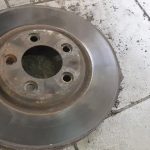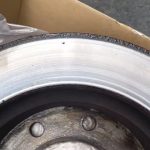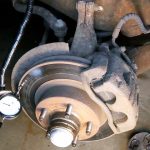
When your car starts shaking during braking or you hear odd squealing sounds, you might be facing warped brake rotors. The most common signs of warped rotors include steering wheel vibration when braking, brake pedal pulsation, squealing or grinding noises, and uneven braking performance.
These symptoms can be subtle at first or escalate into real safety issues that shouldn’t be ignored.
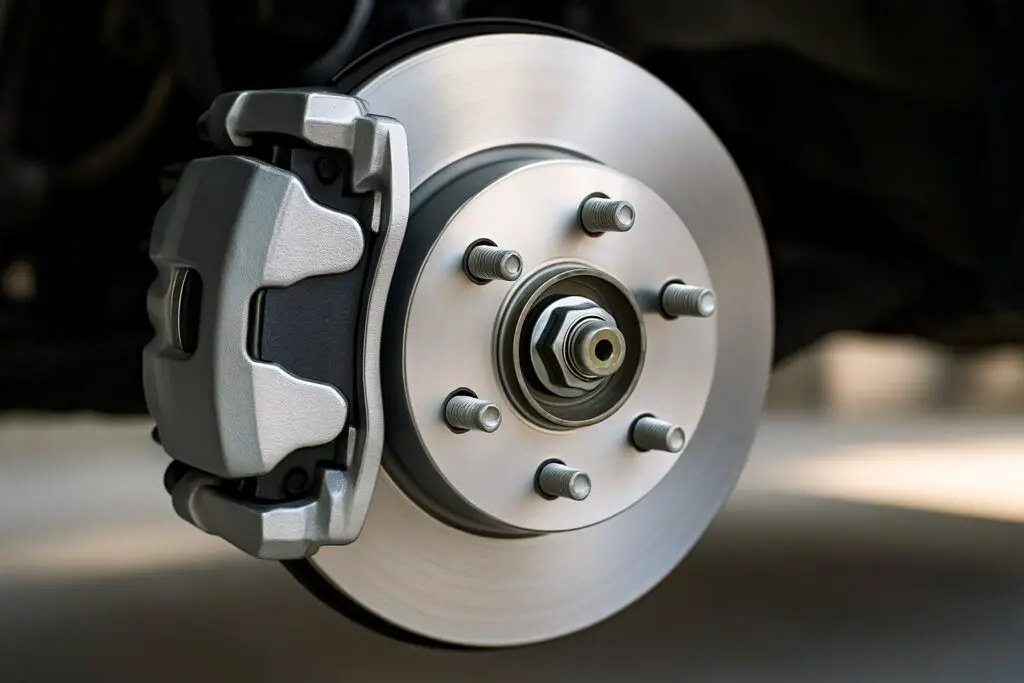
I’ve seen plenty of drivers brush off these warning signs, thinking they’re just minor annoyances. But warped brake rotors can lead to costly repairs and create dangerous driving conditions if you let them slide.
Spotting rotor problems early can save you a headache (and some cash) down the road. Plus, you’ll feel better knowing your car can stop when you need it to.
So, what should you actually look for? I’ll go over the visual clues, performance changes, and a few diagnostic tips that can help you figure out if your rotors need some attention.
Understanding Warped Rotors
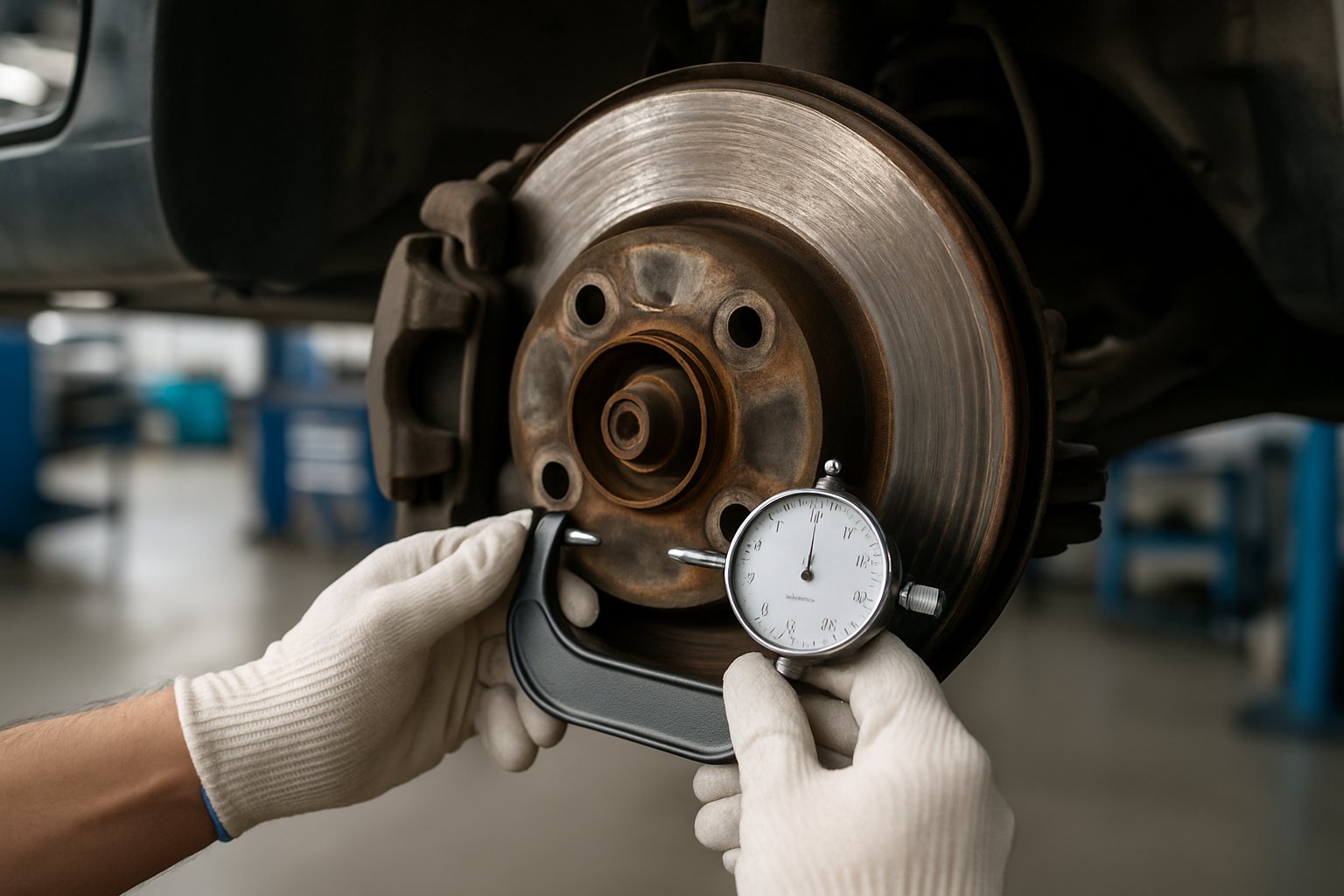
Brake rotors are metal discs that work with brake pads to stop your car. Over time, heat, wear, and not-so-great maintenance can mess them up and leave you with uneven surfaces, vibration, and weaker braking.
What Are Rotors?
Rotors are those round metal discs bolted to each wheel. When I hit the brake pedal, the pads clamp down on the rotors, creating friction to slow everything down.
Most rotors are cast iron or steel, and they’re designed to be smooth and flat. That way, the brake pads can grip evenly across the whole disc.
Types of rotors include:
- Solid rotors (usually on the rear)
- Vented rotors (common up front)
- Drilled or slotted rotors (for better cooling)
The surface has to stay flat—bumps or grooves can cause real problems when you brake.
How Rotors Become Warped
The term “warped” is a bit misleading. Brake rotors don’t actually twist out of shape.
What’s really going on is uneven material buildup on the rotor surface. Brake pedal vibrations usually come from uneven brake pad residue on the rotor.
This leads to high and low spots. When the pads hit those, you feel vibration in the steering wheel or the brake pedal.
Some parts of the pad grab better than others, which hurts your braking power and gives you all those “warped rotor” symptoms.
Common Causes of Rotor Warping
Excessive heat is a big culprit. There are a few ways this can happen:
Heat-related causes:
- Slamming on the brakes or riding them too much
- Long downhill drives without downshifting
- Towing heavy stuff without enough brake cooling
- Racing or just driving too aggressively
Maintenance issues:
- Old brake fluid that can’t handle heat
- Worn-out pads that let metal grind on metal
- Pads were installed the wrong way
- Cheap or incorrect pad materials
External factors:
- Driving through deep water when the brakes are hot
- Poor quality rotors that can’t take normal heat cycles
- Uneven tightening of wheel bolts during tire swaps
And sometimes, it’s just age. Rotors pick up small flaws after thousands of miles.
Most Common Signs of Warped Rotors
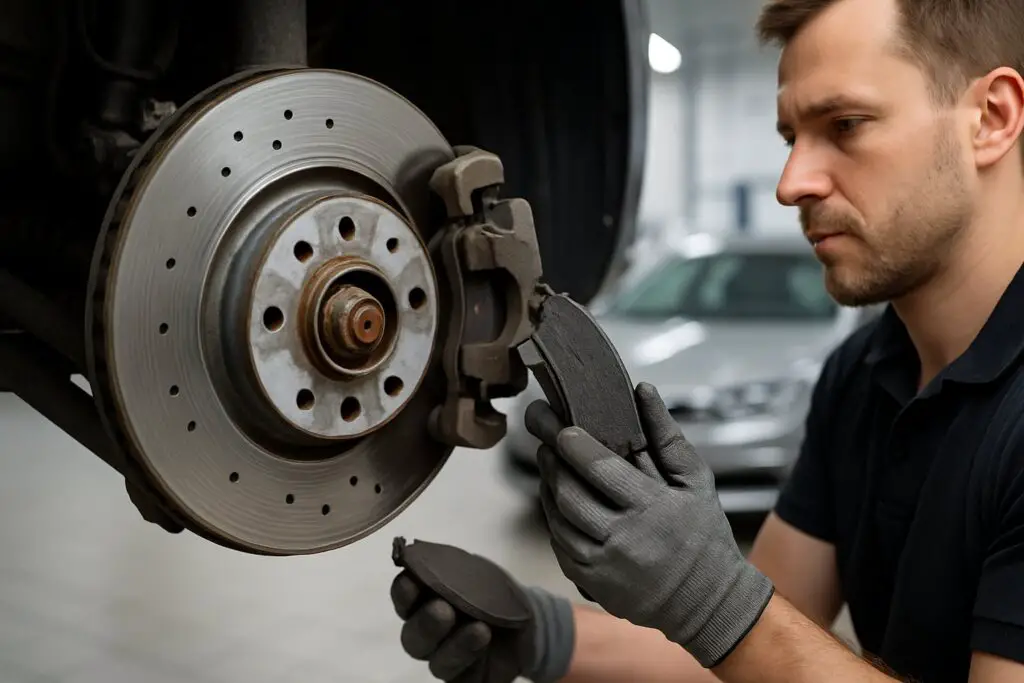
Warped rotors have some pretty clear symptoms. I usually notice vibrations through the steering wheel, a pulsing brake pedal, and some weird noises when I hit the brakes.
Steering Wheel Vibration
Steering wheel vibration is one of the most obvious symptoms. The uneven rotor surface makes the brake pads grab in a choppy way.
When I press the brakes, the steering wheel wiggles or shakes. It’s usually more noticeable at higher speeds or if I brake hard.
This kind of vibration only happens when braking. If the wheel shakes while I’m just cruising, it’s probably something else.
Severity levels:
- Light vibration: Barely there, mostly at low speeds
- Moderate vibration: Obvious shaking during normal braking
- Heavy vibration: Makes it tough to steer
If my steering wheel starts shaking, it’s time to check those rotors before things get worse.
Pulsating Brake Pedal
A pulsating brake pedal is another classic sign. I feel the pedal vibrating or thumping under my foot.
This happens when high and low spots on the rotor push back against the pads, which transfers right to the pedal.
Sometimes it’s just a light pulse with gentle braking. Other times, it only shows up when I really stomp on the brakes.
Unlike a soft or spongy pedal, this one feels firm but pulses in a steady rhythm.
What I might feel:
- Quick up-and-down pedal movement
- Vibration in my foot
- Steady pulsing
- Worse pulsing during hard stops
This often goes hand-in-hand with steering wheel vibration.
Noise When Braking
Warped rotors can make all sorts of noises. The brake pads can’t grip smoothly, so you get squealing, grinding, or scraping sounds.
The louder the noise, the worse the warping usually is.
Common brake noises from warped rotors:
- Squealing: High-pitched, usually during light braking
- Grinding: Harsh metal-on-metal noise
- Scraping: Ongoing scratching sound
- Thumping: Rhythmic bumping as the wheel turns
The noises often speed up as the car speeds up. If it’s just when braking, warped rotors are a good bet. If it’s constant, something else might be up.
Visual Indicators of Rotor Damage
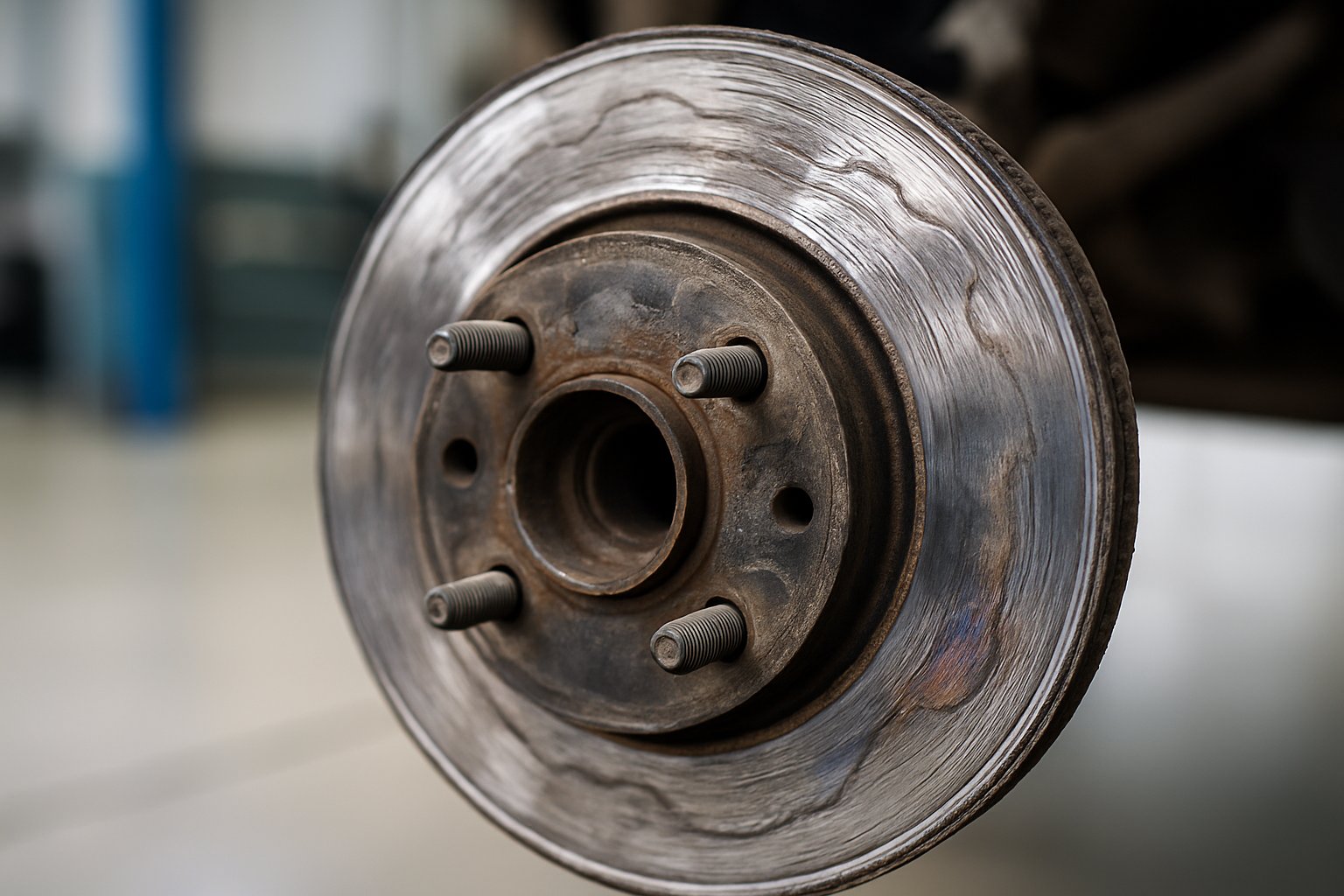
Sometimes you can spot rotor issues just by looking. Deep scratches, blue or purple heat spots, and uneven thickness are all red flags.
Scoring and Grooves
I check for deep grooves and ridges first. These show up when pads wear down to the metal backing.
Some light scratches are normal, but if my fingernail catches on a groove, those rotors are done.
Common groove patterns:
- Circular scratches around the disc
- Deep lines across the surface
- Rough, bumpy texture
I also keep an eye out for cracks. Even small ones can grow and eventually cause the rotor to fail.
Blue Spots
Blue or purple spots are a giveaway for overheating. Heat spots show up after heavy braking or dragging pads.
Those spots are harder than the rest of the rotor, so pads don’t grab them well, and stopping power drops.
Things I look for:
- Blue or purple patches on the surface
- Rainbow coloring near hot spots
- Warped look around the discolored areas
Heat damage makes rotors more likely to crack or get even more uneven.
Uneven Wear
I check rotor thickness in a few places. It should be the same all the way around.
Uneven wear makes the surface wavy, and I can usually feel high and low spots with my hand.
What stands out:
- Thick and thin spots on the same rotor
- Wavy edges around the rim
- Rough patches mixed with smooth ones
From the side, a warped rotor might even look like it wobbles as the wheel turns.
Performance Issues Associated with Warped Rotors
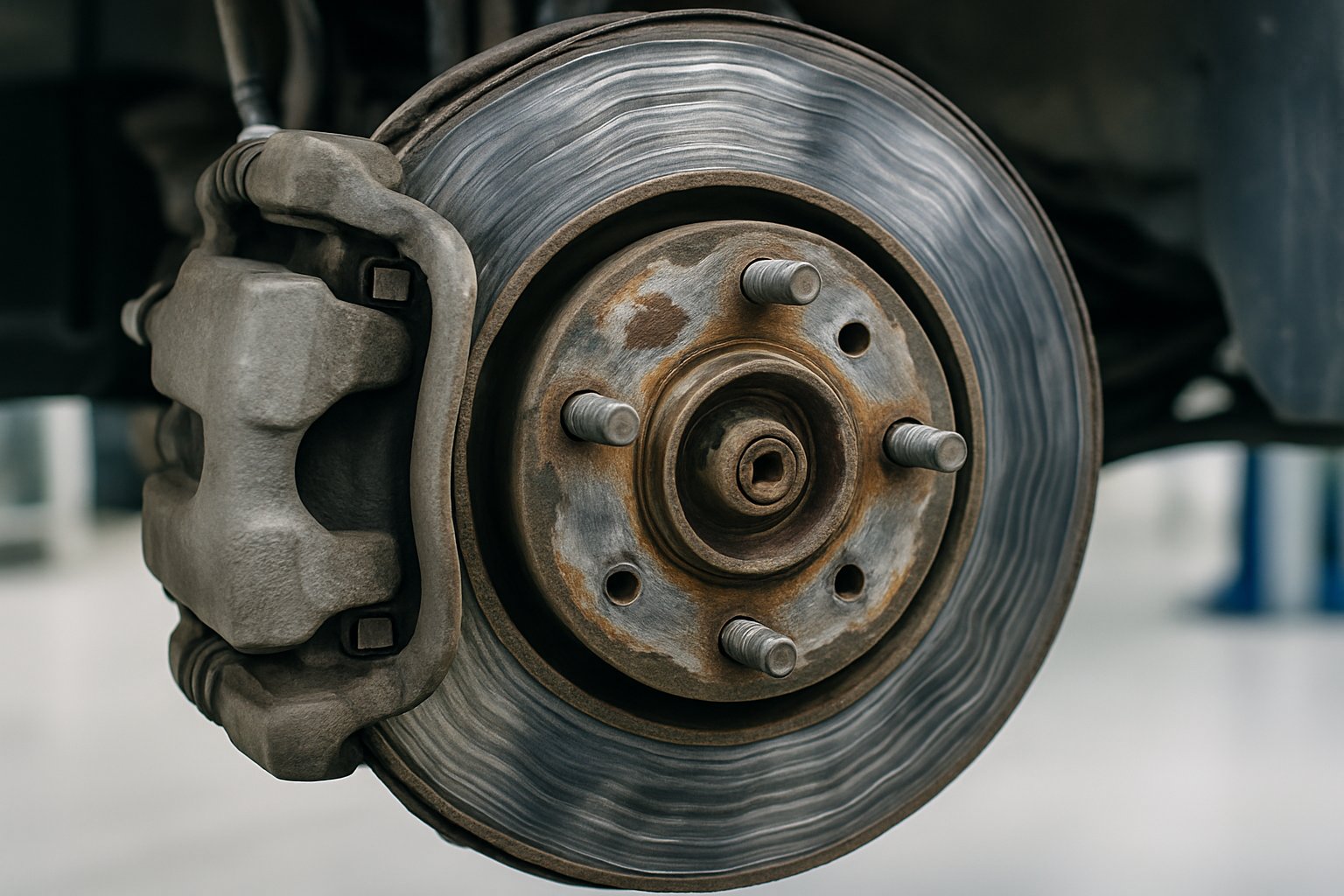
Warped rotors can make your brakes unreliable and mess with how safely you can stop. Stopping distances get longer, and sometimes the car pulls to one side when you hit the brakes.
Reduced Braking Efficiency
When rotors get warped, the brake pads can’t make smooth contact with the rotor surface. This uneven pressure really cuts down your stopping power.
I’ve noticed that warped rotors cause reduced braking performance because the pads keep hitting high and low spots instead of gripping evenly. Less friction means less bite—pretty frustrating, honestly.
Each time I hit the brakes, the pads wear unevenly against the warped surface. The problem just builds up over time.
Key signs of reduced efficiency:
- The brake pedal feels softer than usual
- Have to press harder for the same stopping power
- The brakes just feel sluggish
With a warped surface, the brake system can’t work at full strength. Only parts of the pad actually touch the rotor, so you lose out on real stopping force.
Increased Stopping Distances
Warped rotors will make it take longer to stop your car. The braking force gets inconsistent and a bit unpredictable.
I’ve found that warped rotors can seriously mess with braking performance, leading to longer stopping distances. The pads end up grabbing and letting go over and over as you slow down.
This creates that annoying pulsing effect. You lose the smooth, steady stopping you expect.
Stopping distance factors:
- How fast you are going when you hit the brakes
- How badly the rotors are warped
- Road and weather conditions
- Vehicle weight and tire shape
Extra stopping distance is a big deal in emergencies. What should take 100 feet could suddenly take 130 feet or more—yikes.
Vehicle Pulling to One Side
If one rotor is more warped than the other, your car will pull to one side when you brake. One wheel just grabs harder than the other.
I notice this pulling effect most when I brake a bit harder. The car veers left or right, and I have to steer against it to keep things straight.
Front rotor warping is usually more obvious than the rear. That’s because the front brakes do most of the work in modern cars.
Common pulling patterns:
- Light braking: Slight drift to one side
- Moderate braking: Clear pull that needs correction
- Hard braking: Strong pull, sometimes tough to control
This pulling can make highway driving nerve-wracking. High-speed braking with warped rotors can really catch you off guard if you’re not ready for it.
Diagnosing Warped Rotors
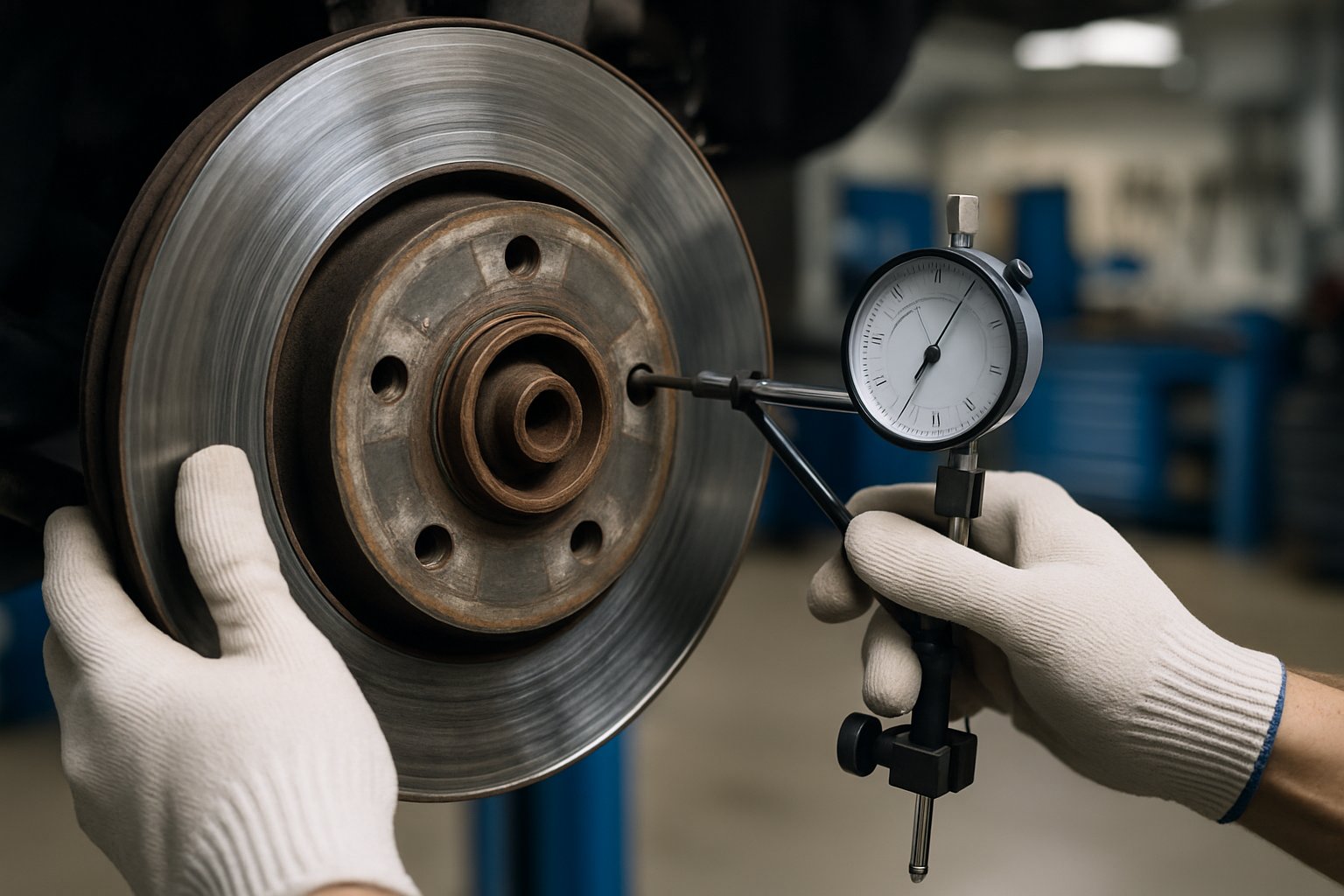
I can check for warped rotors with a visual inspection, some test driving, or professional tools. Each method tells me something different about the rotor’s condition.
Physical Inspection Tips
I start by looking at the rotor surface for obvious damage or weird wear. Warped rotors show some clear warning signs once you know what to look for.
Visual indicators I look for:
- Deep grooves or scoring
- Blue spots from overheating
- Uneven wear across the face
- Rust in patches
- Cracks at the edges
I take off the wheel to get a good look at the whole rotor. Running my finger over the surface helps me feel for ridges or bumps.
Thickness variations are a big clue. I use a micrometer to check the thickness at several spots. If there’s more than 0.001 inches difference, that’s not good.
I also spin the rotor to check for wobble, which is called lateral runout. Even a little wobble can mess with your brakes.
Test Drive Observations
I do some simple driving tests to spot warped rotor symptoms. Testing for rotor warpage doesn’t need fancy tools—pay attention to the road.
Braking tests I try:
- Light braking from 30 mph
- Moderate braking from 45 mph
- Highway braking if it’s safe
I watch for steering wheel vibration. If it shakes more as I brake, the front rotors might be warped.
Pedal pulsation usually means the rears are the issue. If the brake pedal moves up and down under my foot, that’s a red flag.
I listen for grinding, squealing, or scraping. Those noises often mean the damage is past just warping.
Temperature checks after driving can help too. I’ll use an infrared thermometer to spot hot spots on the rotor.
Professional Assessment Methods
When a visual check isn’t enough, I break out the precision tools. Professional runout measurement techniques give exact numbers.
Dial indicator setup:
- Mount the indicator to measure runout
- Set the probe against the rotor surface
- Rotate the rotor all the way around
- Record the highest and lowest readings
I compare my results to what the manufacturer says is okay. Most rotors shouldn’t go over 0.002 inches of runout.
Thickness variation gets checked with a micrometer at several points, usually every 45 degrees around the rotor.
I keep track of all these numbers for future reference. It helps me decide if the rotor needs resurfacing or just replacing.
Machine shop assessment is the final step. I’ll have rotors checked on a brake lathe to see if they can be safely resurfaced.
Long-Term Effects of Ignoring Warped Rotors
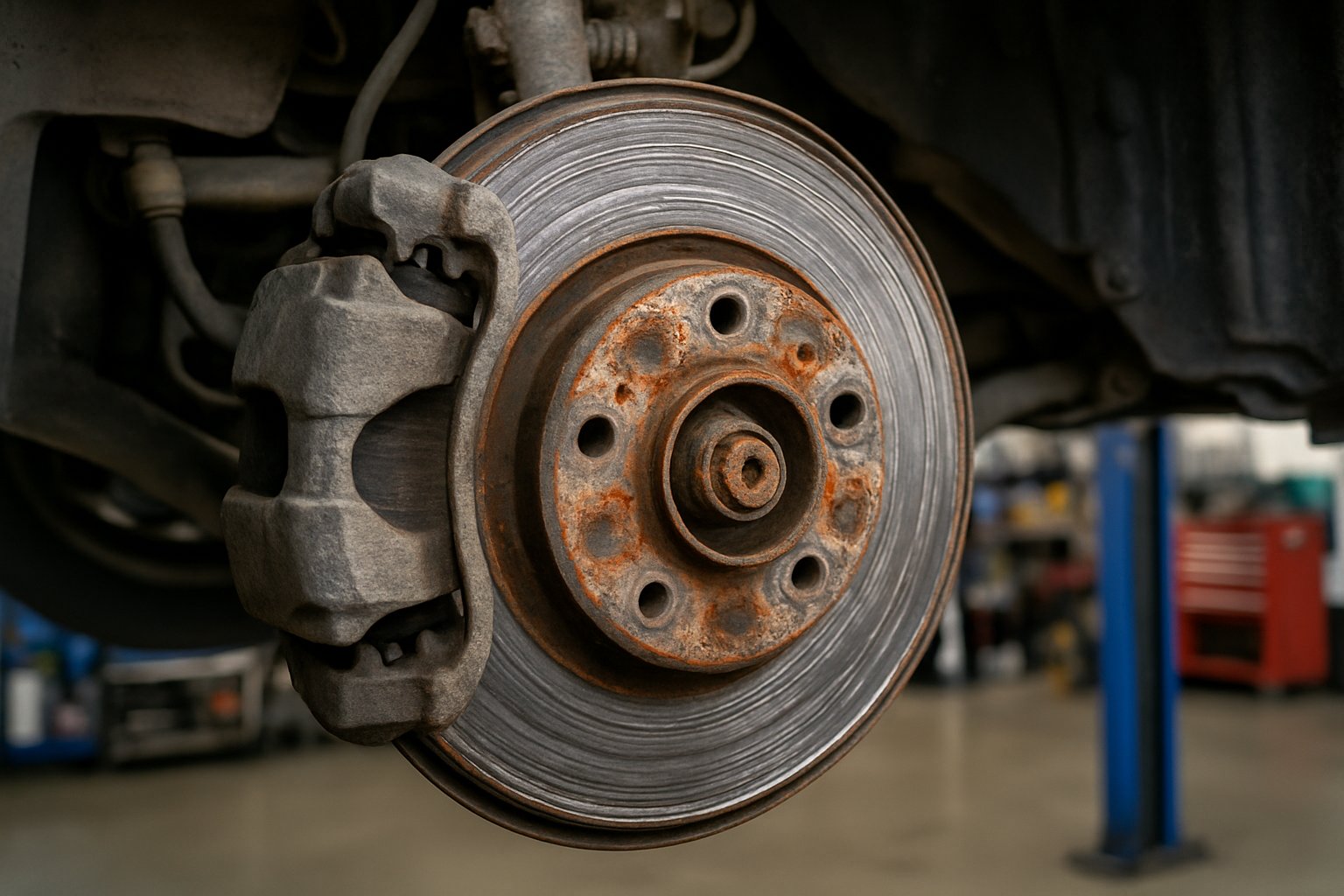
Ignoring warped rotors gets expensive fast, and it’s a real safety risk. Keep driving, and you can damage calipers and bearings, and repair costs can jump 300% if you let it go.
Potential for Further Brake System Damage
If I ignore warped rotors, the brake pads start to wear unevenly. That creates hot spots and puts extra strain on the calipers.
The calipers have to work harder to keep contact with the warped surface. Over time, this can damage the caliper pistons and even cause brake fluid leaks.
Wheel bearings take a beating from all the vibration. That constant shaking loads up the bearings and wears them out early.
Here’s what usually gets damaged:
- Brake pads wear out about 40% faster
- Calipers start to leak
- Wheel bearings fail sooner
- Brake lines get stressed
- Master cylinder works overtime
The brake system is all connected. When rotors go bad, every part ends up working harder. Suddenly, a simple rotor fix turns into a big, expensive job.
Safety Risks on the Road
Warped rotors make braking unpredictable, especially when you need it most. The pedal pulses and vibrates, making it tough to keep steady pressure in an emergency.
Stopping distance jumps way up with damaged rotors. The uneven contact just kills your braking force.
Steering wheel shake can make you lose control if you’re braking hard. It’s even worse on wet or slick roads, where you really need precision.
The most serious safety issues include:
| Risk | Impact |
|---|---|
| Longer stopping distance | 15-25% increase |
| Brake fade | Less power when hot |
| Steering vibration | Possible loss of control |
| Pedal pulsation | Inconsistent braking |
That steering wheel shake isn’t just annoying—it’s a serious warning sign that your brakes might be failing. When you need reliable braking, warped rotors just can’t deliver.
Preventing Rotor Warping
You can avoid expensive rotor issues by sticking to maintenance schedules and tweaking how you drive. Regular brake care and skipping those hard stops from high speeds are the two best ways to keep rotors from warping.
Proper Brake Maintenance
I recommend checking your brake pads every 12,000 miles or whenever you get an oil change. Worn pads lead to metal-on-metal contact, which eats up rotors fast.
Change your brake fluid every 2-3 years. Old fluid collects moisture and weakens braking. You end up pressing harder, which just heats things up more.
Have your rotors checked for thickness and runout during brake service. With decent care, rotors should last 50,000 to 70,000 miles.
Keep the brake system clean. Dirt and debris cause uneven pad wear, and that leads to hot spots on the rotor.
Check that your calipers are working correctly. Sticking calipers make for constant friction and overheating, which is never good.
Driving Habits to Avoid
I try to steer clear of sudden stops from highway speeds whenever I can. High-speed braking creates a ton of heat, which can actually warp your rotors.
Don’t ride your brakes on long downhill grades. Instead, use engine braking or shift into a lower gear. Keeping constant pressure on your brakes just builds up more heat than you want.
Unless it’s a real emergency, I never slam on my brakes. Taking it slow and stopping gradually helps spread the heat out across the rotor.
Avoid repeated hard braking. That kind of racing-style or stop-and-go city driving really heats up your brake components. Let your brakes cool down a bit between those hard stops.
And here’s a weird one: don’t drive through deep water right after heavy braking. That sudden temperature change can mess up your hot rotors in a hurry.